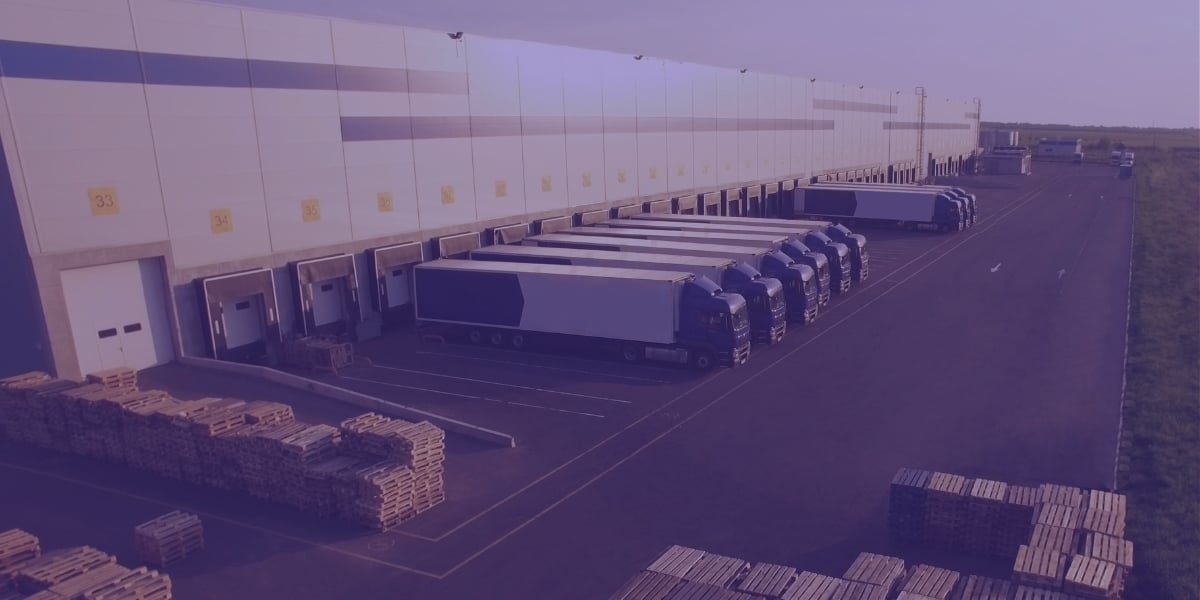
RFID Dock Doors: Automating Receiving and Shipping Verification
This guide shows how an RFID dock door verifies receiving and shipping, what hardware it takes, and which SLS D-Series model suits your doorway, reader and weather.

My Cart
—
Incl. VAT
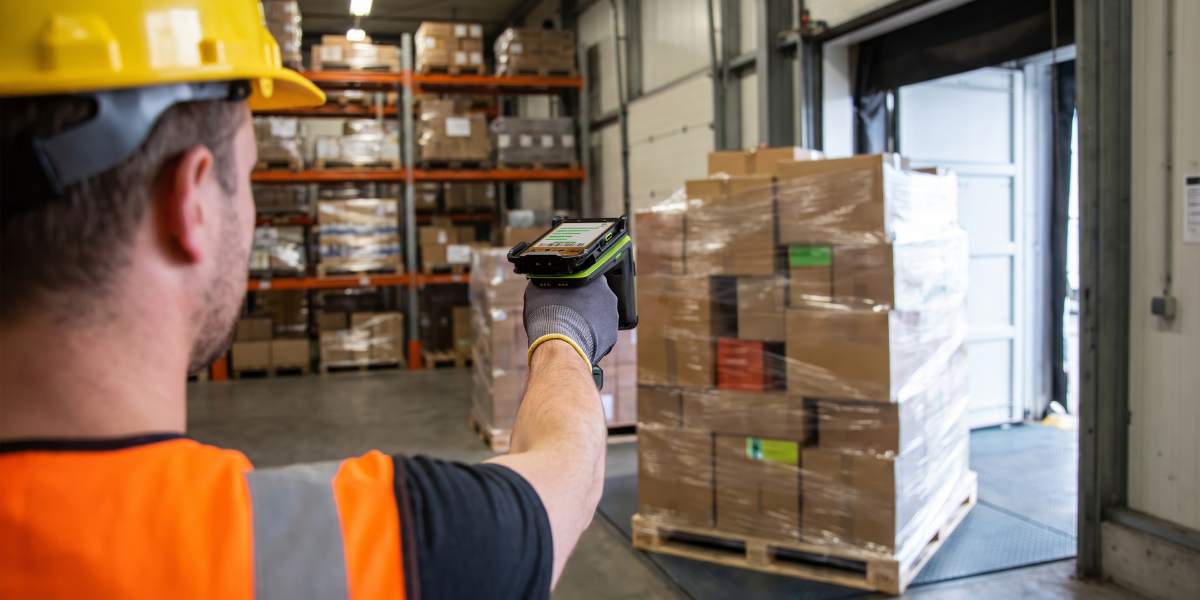
UHF RFID is the frequency most warehouses choose because it is possible to read up to 1,000 tags per second from up to 10 meters with no line of sight, while LF and HF read from a few centimeters to under a meter. LF and HF handle metal and liquids better, so UHF needs tags matched to the item and a reader set for your region’s band. This guide covers how UHF RFID works, why it fits warehouse work, which UHF RFID tag to buy, and where it falls short.
In this article
UHF RFID works in a warehouse by sending a radio signal from a reader antenna to passive tags, which answer with an ID that the reader passes to your software. UHF RFID uses the 860 to 960 MHz band, and tags and readers follow the GS1 Gen2 protocol, which ISO/IEC standardized as 18000-63.
A passive tag has no battery. It draws its power from the reader’s signal, so tags can sit on cartons and totes with no charging or battery changes.
The reader sends its list of tag IDs to your warehouse management system, which matches each ID to a pallet, carton or container. Levata’s RFID software is built to integrate with ERP and WMS platforms, so the counts show up in the system your team already uses.
Most warehouses use UHF RFID instead of LF or HF because it is the one frequency that reads many tags at once from meters away. LF reads one tag at a time from centimeters, and HF reads under a meter. For a dock door, a pallet or a rack aisle, that distance is the whole job.
| LF | HF | UHF | |
|---|---|---|---|
| Frequency | 125 to 134 kHz | 13.56 MHz | 860 to 960 MHz |
| Read range | Centimeters | Under 1 meter | Up to 10 meters |
| Many tags at once | One tag at a time | Good | More than 1,000 tags per second |
| Near metal and water | Unaffected | Less affected than UHF | Needs tags matched to the surface |
UHF tags also cost pennies at volume, which matters when you tag every carton instead of every pallet.
LF and HF still win in places. LF and HF work better in moist conditions, and HF is less affected by metal than UHF. For badge access at a door or a handful of items at short range, either is simpler. The RFID frequency guide compares all three in detail.
UHF RFID reads from up to 10 meters at more than 1,000 tags per second, and current readers match that range. The Zebra RFD40 handheld sled lists a nominal read range of more than 6 meters, or 19.7 feet, and 1,300 or more tags per second.
Range depends on the tag, reader power, antenna and surroundings. Actual range in a warehouse depends on the reader's power, the antenna, and what the tag is attached to.
A barcode scanner needs a clear line to one label. A UHF reader picks up tags through cardboard and wood, so it can count cartons inside a stacked pallet without anyone lifting them out.
The type of reader you choose depends on the application. Handheld mobile RFID readers suit cycle counts, fixed RFID readers cover aisles and portals, and RFID dock doors handle inbound and outbound freight. You can browse every option in Levata’s RFID readers category.
A UHF RFID tag is a microchip and an antenna built to answer a UHF reader, and the right one for your warehouse depends on what the tagged item is made of. Levata stocks RFID tags as adhesive tags, hard tags and wristbands.
Three types cover most warehouse work.
| Label or inlay | Hard tag | On-metal tag | |
|---|---|---|---|
| What it is | Adhesive label with a chip and antenna inside | Rigid tag in a protective housing | Tag built to work against metal |
| Where it fits | Cartons, totes and packaging | Reusable assets that take rough handling | Metal racks, tools and containers |
| How you get one | Print and encode it on an RFID printer | Pick the model for your item and surroundings | Pick the model rated for metal surfaces |
A label goes on cartons and totes. You print and encode it on an RFID printer, and Levata carries RFID labels for that. Hard tags suit reusable assets and rough handling. On-metal tags are built for racks, tools and steel containers, which the next section covers.
Order a sample set and test it on your real cartons before you buy thousands. Levata runs proof of concept studies for RFID projects to ensure the application and expected results align with the solutions deployed.
UHF RFID struggles near metal and liquids, and it needs a reader set for your region’s band. UHF signals are absorbed by water, and metal and liquid items need tags built for them or reads get shorter or fail. A steel rack and a case of bottled water are the usual trouble spots.
The band also changes by region. US readers use 902 to 928 MHz, the EU lower band is 865 to 868 MHz, and the EU upper band is 915 to 921 MHz. Power limits and channel plans differ too, so buy readers certified for the region where they will run.
| Region | UHF RFID band |
|---|---|
| United States (FCC) | 902 to 928 MHz |
| European Union, upper band | 915 to 921 MHz |
| European Union, lower band | 865 to 868 MHz |
Crowded buildings add one more problem. When several RFID systems run nearby, a reader can pick up tags that belong to another system. GS1 calls this tag clutter and added features to Gen2v3 to reduce it, so ask about Gen2v3 support when you buy new readers.
A UHF RFID warehouse deployment usually puts fixed readers where goods and containers pass a set point, and handheld readers where people count stock. Adient, an automotive seating supplier, tagged 875,000 returnable shipping containers and reads them at RFID dock doors, so it can see when containers move in and out.
Premium Guard, an automotive aftermarket distributor, started a phased RFID rollout with an RFID tunnel, dock doors and handheld mobile readers. The case study reports accurate reads at both the tunnel and the dock doors.
Deciding if UHF RFID fits your warehouse comes down to what you tag, where you read, and how many items pass each point. Work through these steps in order.
Barcodes still make sense when every item passes one station with the label facing the scanner and volumes are low. They cost less to start and need no tag testing. UHF RFID earns its cost when people spend their day finding, counting or lining up labels. Levata works with warehousing and distribution teams on both.
Yes. RAIN RFID is the name for passive UHF RFID that follows the GS1 EPC UHF Gen2 protocol and the ISO/IEC 18000-63 standard. You will see both names on spec sheets and product pages.
Most do not. Passive tags use the reader’s signal for power. Active tags carry a battery and can be read from several tens of meters, so they suit large assets and yards more than cartons.
Most warehouses keep barcodes next to RFID, because a barcode still works when a tag is missing or damaged. Some handhelds do both. The RFD40 Premium Plus sled adds an integrated scan engine to UHF reading.
UHF RFID has few encryption options, but tags support read and write protection and anti-cloning features. For stock IDs that is usually enough. If you need to tie sensitive data to an item, keep it in your software and let the tag carry only an ID.
UHF RFID is the frequency most warehouses use because one reader can read a whole pallet from several meters away. Match the tag to the item, set the reader for your region, and partner with an expert to run a proof-of-concept verification on your own stock before you scale.
If you are weighing UHF RFID for a warehouse, the Levata team can walk through your layout, tag choices, and reader options. We offer full services from design, to deployment, through ongoing lifecycle management and support. Speak to an Expert.
This guide shows how an RFID dock door verifies receiving and shipping, what hardware it takes, and which SLS D-Series model suits your doorway, reader and weather.
Visit Levata at NRF 2027, booth #6872, to explore RFID, store modernization, global IT fulfillment, and managed services that help retail operations scale.
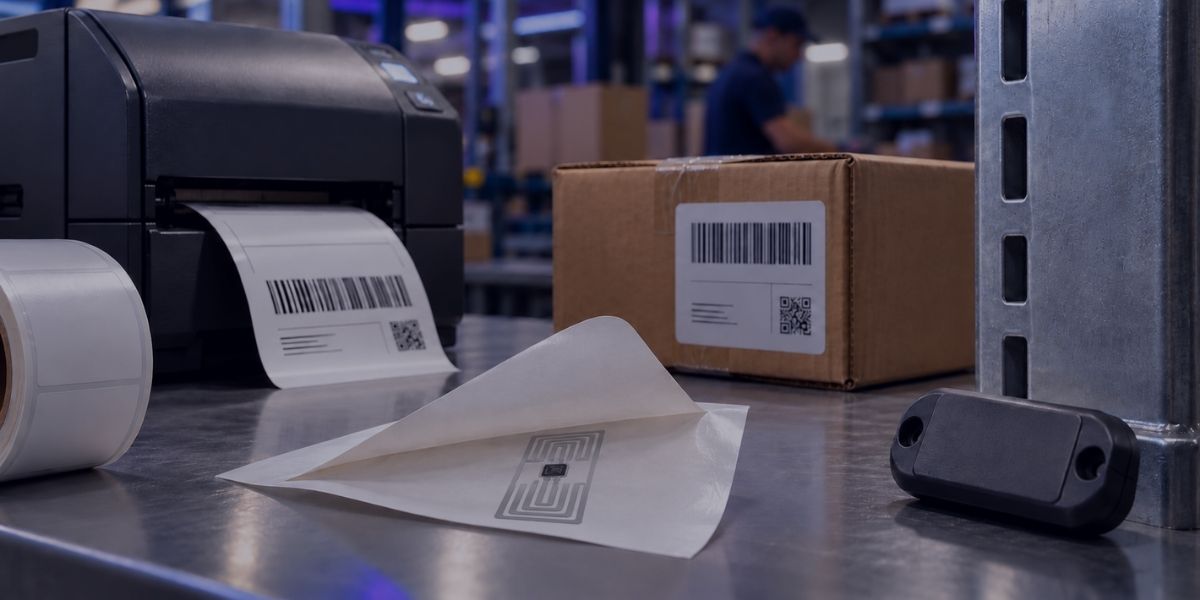
RFID labels explained: the types, how to print and encode them, and when a hard tag is the better choice.
Welcome, ID Card Group customers!
On September 24th, IDCardGroup.com transitioned to Levata.com. You still have access to the ID solutions you rely on, along with a broader selection of data capture and technology solutions.
What you can expect:
Questions? Call 1-833-353-8282.
Thank you for choosing Levata.
Welcome, IT Planet customers!
On September 24th, ITPlanet.com transitioned to Levata.com. You still have access to the products you rely on, along with a broader selection of data capture and technology solutions.
What you can expect:
Questions? Call 1-833-353-8282.
Thank you for choosing Levata.
Welcome, Barcode Planet customers!
On September 24th, BarcodePlanet.com transitioned to Levata.com. You still have access to the products you rely on, along with a broader selection of data capture and technology solutions.
What you can expect:
Questions? Call 1-833-353-8282.
Thank you for choosing Levata.