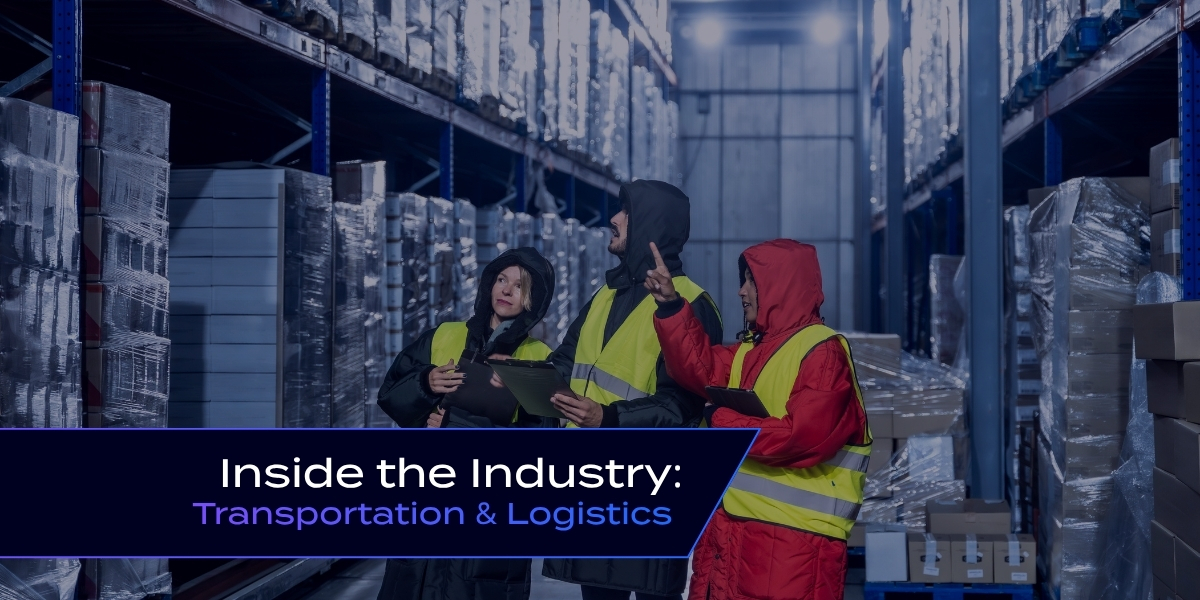
Transportation and logistics (T&L) companies are seeing an increased demand to move temperature-sensitive products. For example, advancements in biopharmaceuticals have made new options available to patients, such as cell and gene therapies and personalized medicine. However, many of these products require cold chain transport. And ecommerce has expanded to include perishable foods, meal kits, medicines, and other temperature-sensitive products. To meet this demand, T&L companies must implement solutions that enable control and visibility that ensure deliveries arrive fresh and safe for consumers.
What Are Cold Chain and Condition Monitoring?
Cold chain and condition monitoring refer to continuous tracking and management of temperature and the environment for products during storage and transport. Modern temperature and condition monitoring solutions leverage Internet of Things (IoT) sensors and data loggers to increase visibility into temperature, humidity, and shocks. A digital approach enables continuous monitoring, real-time data, and a complete record from the manufacturer to the customer.
What's Driving Temperature and Condition Monitoring Solution Implementation?
Digital cold chain and condition monitoring solutions benefit T&L companies, their clients, and end-user customers in four ROI-boosting ways:
Demand for Reduced Spoilage
Storing and transporting products at the appropriate temperature prevents shortages and financial losses from waste. Science Direct reports that 17% of food waste occurs during transportation. Shipments that arrive unusable because of spoilage can be a significant problem for grocers and suppliers, particularly those that serve areas struggling with food security. The issue may be even more critical with pharmaceuticals. Patient health can be at risk if the medication and treatment shipments they're waiting for arrive unusable or unsafe. Of course, there is also a financial impact from the shipment of spoiled food or medicine. They mean a loss for producers and, subsequently, the T&L company that transported them.
Compliance for Proof of Condition During Transit
Regulations in different parts of the world include stricter requirements for documentation and traceability during transit. For example:
Noncompliance results in fines (some as high as $500,000), inability to deliver products, brand damage, and business loss.
Faster Response and Issue Resolution
With real-time data from IoT sensors, T&L companies can immediately respond if a refrigeration failure, power outage, or transportation excursion threatens the temperature-sensitive products. The agility that companies gain from continuously monitoring temperature and conditions helps them minimize waste and loss in addition to meeting service level agreements (SLAs).
Operational Efficiency
SLAs and regulations typically require monitoring shipments and generating temperature and condition logs. Manual processes are time-consuming and create opportunities for errors. Automating with cold chain monitoring, condition monitoring, and logging solutions reduces the time and labor costs associated with these shipments, increasing operational efficiency.
Must-Have Technologies for Cold Chain and Condition Monitoring
To monitor temperature and conditions, T&L companies need carefully implemented technology. Wireless infrastructure is the backbone of cold chain operations. The wireless network must provide complete Wi-Fi coverage inside refrigerated and freezer environments in addition to outdoor yard coverage. This requires purpose-built infrastructure for reliable performance in extreme environments. T&L companies must also have high-density wireless to ensure all scanners, tablets, printers, radio-frequency identification (RFID) readers, and IoT sensors can connect to the network.
Monitoring temperature-sensitive storage and shipment conditions also requires devices with the right feature set. IoT sensors must capture vital information, such as temperature, humidity, and shocks/vibrations, during transport. T&L companies can benefit from active RFID tags that actively send data to readers and GPS trackers that improve shipment visibility and traceability. RFID technology also improves inventory accuracy in cold storage, reduces the need for manual cycle counting, and collects data for recall readiness. Also, frontline workers need durable handheld devices that allow them to access systems and dashboards and receive alerts when sensors indicate the need for equipment repair or maintenance.
Companies will also benefit from both cloud and edge computing. A hybrid environment enables processing data close to the source for a fast response when temperatures or conditions fall outside of specifications and storing essential historical data in the cloud and sharing information across the supply chain.
Where to Find the Expertise You Need
A modern temperature and condition monitoring solution leveraging IoT technology, hybrid cloud and edge, and network solutions require expertise. T&L companies will benefit from working with a partner that offers consulting from planning to proof of concept or pilot support, to procurement, deployment, staging, and kitting. Leading providers will also offer device lifecycle services, including help desk repairs, replacement with advanced exchange, and end-of-life services. A partner that offers comprehensive services will also ensure optimal network performance, beginning with a site survey and infrastructure installation through to ongoing network monitoring and management. A partnership with a leading provider will ensure system performance, compliance, and the most cost-effective operation.
Pressures from customers, regulators, and the economy demand a better way to monitor cold chain inventory storage and shipment conditions. Contact us to explore your options for upgrading to greater accuracy, protection from losses, and compliance.