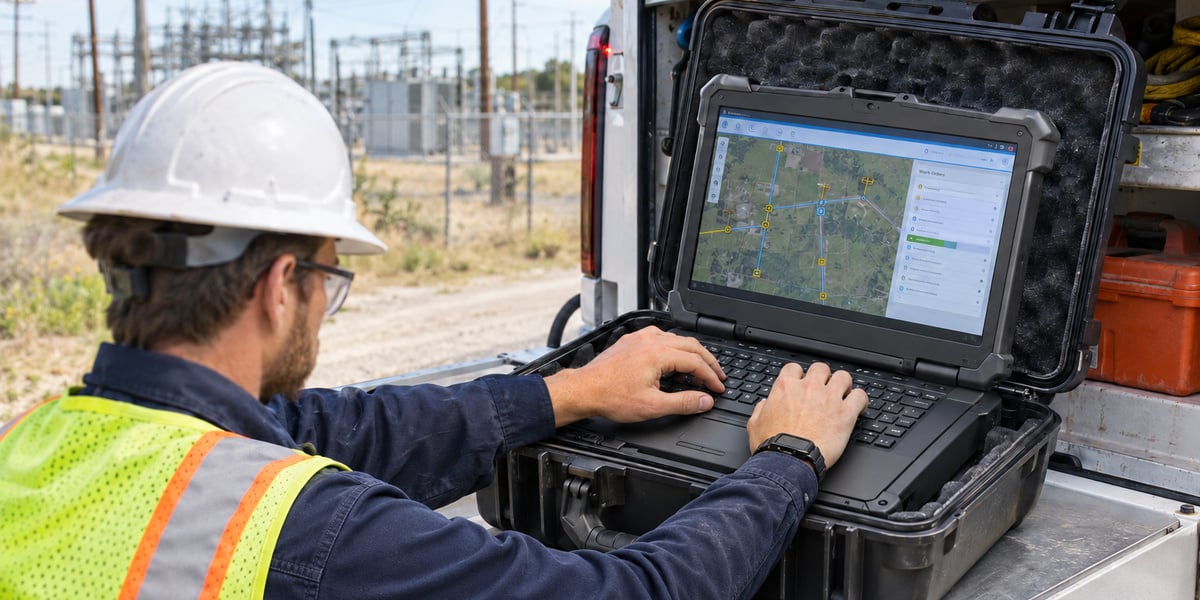
The Best Rugged Laptops by Use Case
Find the best rugged laptop for your work environment. Compare fully rugged, semi-rugged and ruggedized models by rating, display, battery and price.

My Cart
—
Incl. VAT
Author: Mike Vaughn
Thin margins are nothing new to retail. Forrester reports that net retail margin generally averages only 3% to 4% after operating expenses, taxes, and overhead, leaving little room to adapt to change profitably. Add in rising costs, intense competition, and changing customer expectations, and it's hard to even operate as an "average" business. However, shifting a margin protection strategy from adjusting pricing structures to operational control can bring more sustainability and profitability to retail businesses.
Although each day seems to bring new challenges that threaten retail margins, they fall into three general categories:
Consumers are more informed than ever, and if they have a question about whether a retailer is offering an item at the best price, they can use their smartphones to find the answer with just a few clicks. Easy access to information and consumer price sensitivity mean retailers have little room to raise prices to improve retail margins. Although competitive pricing is an issue in any merchant segment, pricing products right is even more consequential for retailers that sell products that fall into the "discretionary" category. Consumers can delay purchases or look for alternative brands if they don't see enough value.
Returns add another pressure. Return policies have become a competitive lever, with many retailers offering liberal return policies and free returns for online orders. According to Capital One Shopping, consumers are taking advantage, with the average retail return rate at about 16% and the ecommerce return rate even higher at 24.5%. The return policies that retailers have established to compete require them to absorb costs associated with processing, handling, restocking, and, in some cases, return shipping.
Retailers are facing greater cost sensitivity as inflation, changing tariff policies, increasing wages, and supply chain volatility lead to higher operating expenses. Those rising costs hit the bottom line directly when retailers can't pass them on to price-sensitive consumers.
Although competition is increasingly tough and cost sensitivity is rising, retailers cannot simply cut back on staff, services, or customer engagement. At the same time competition and costs rose, so did consumer expectations. Deloitte research concludes that consumers are looking for value that comprises merchandise mix, product quality, in-store experiences, customer service, and loyalty rewards. Decreasing staff past the point where employees can provide a high level of customer service or making other cuts that impact customer experiences can work against profitability goals.
Retailers can't eliminate competition, control inflation, or prevent supply chain volatility. However, they can control how efficiently their operations run. Optimized processes and workflows, supported by retail technology, can give retailers the power to improve retail margins. Modernizing these four areas of the business with digital solutions can be key elements of a margin protection plan:
Many retailers continue to rely on traditional cycle counts as the cornerstone of inventory management; however, they only provide snapshots of inventory at specific points in time. RFID technology, on the other hand, enables continuous inventory data, giving retailers greater visibility into the location and quantity of stock on hand. Continuous inventory visibility also eliminates the need to freeze inventory during cycle counts and reduces the need for labor to accomplish counts. With more accurate inventory information from automated inventory tracking, retailers can better control shrinkage, avoid unnecessary replenishment, and reduce losses from over-ordering.
The impact on a retailer's bottom line can be significant. Research from Zebra Technologies and Oxford Economics found that retailers achieved revenue growth and profitability gains of up to 1.8 percentage points through improvements to inventory management workflows.
Labor is typically a retailer's highest controllable cost. But simply cutting hours can create longer waits, understocked shelves, disorganized displays, slow online order fulfillment, and, as a result, dissatisfied customers.
A better strategy is to deploy workforce optimization solutions to increase team members' productivity. Enterprise mobility gives employees access to inventory, orders, task information, and other applications wherever they work, instead of requiring them to walk to stationary terminals to complete tasks. Zebra Technologies and Oxford Economics research also found that connecting retail teams to accurate inventory data improves task execution completion rates by 63%. Greater productivity can help retailers complete more work with available staff and potentially operate some shifts with fewer scheduled hours, protecting retail margin without sacrificing service.
Retailers that offer online ordering and delivery or merchants that transfer stock between stores or channels need enterprise visibility. Supply chain visibility solutions that leverage RFID, Internet of Things (IoT), and GPS technologies can help retailers track where inventory is, en route or in storage. Accurate, complete inventory information makes transportation management easier, helping to optimize truck space and reduce fuel use. A supply chain visibility solution also gives retailers insights into their carriers and vendors, helping them understand which deliver on time and most cost-effectively.
Manual and paper-based processes don't just require time and labor; they can also delay access to data or create silos. When retailers use digital tools to capture data, they have real-time access to information that they can analyze to identify inefficiencies and their root causes. With those insights, retailers can make smarter decisions that factor in demand forecasting, dynamic pricing, inventory allocation, and labor scheduling, even taking into account time, day, or weather conditions.
Smooth data flows also establish a foundation for automation and artificial intelligence. With a reliable data stream of relevant information, retailers can automate repetitive work and decrease waste, and personalize service to increase revenues and loyalty.
Overall, improved inventory and supply chain visibility, workforce optimization, and data-driven decision-making resulted in a 22% decrease in operating costs compared with companies continuing to use legacy processes. Oxford Economics points out that those savings directly affect retail margin protection.
Greater operational control requires modern processes supported by technology, and the expertise to plan, select, and implement that technology for the best outcomes. An experienced retail technology partner can help identify opportunities to mobilize associates, automate data collection, improve inventory accuracy, and turn operational data into actionable insights. A partner can also optimize mobile networks for reliable connectivity across stores, warehouses, and the supply chain.
An experienced retail technology provider will also offer managed network and device lifecycle management services, including repairs, replacement, and help desk support to maximize technology uptime without increasing demands on internal IT teams.
The reality is that retailers can't eliminate price sensitivity, competition, or every other threat to profitability, but with a retail IT solutions provider, they can build greater visibility and control into processes that impact retail margins.
Contact Levata to learn how greater operational control can help protect retail margin.
About the Author: Mike Vaughn is a digital transformation leader with more than a decade of global experience helping retailers modernize operations through strategic technology adoption. As a Senior Director of Enterprise Sales at Levata, he works closely with retail organizations to design and implement solutions that enhance the shopper experience while improving operational visibility across stores and supply chains. Vaughn partners with customers to deploy mobility, data capture, and automation technologies that streamline workflows, improve inventory accuracy, and support seamless omnichannel retail strategies, from the sales floor to fulfillment. His customer-first approach focuses on helping retailers use connected technology and intelligent insights to deliver faster, more convenient, and more personalized shopping experiences.
Find the best rugged laptop for your work environment. Compare fully rugged, semi-rugged and ruggedized models by rating, display, battery and price.
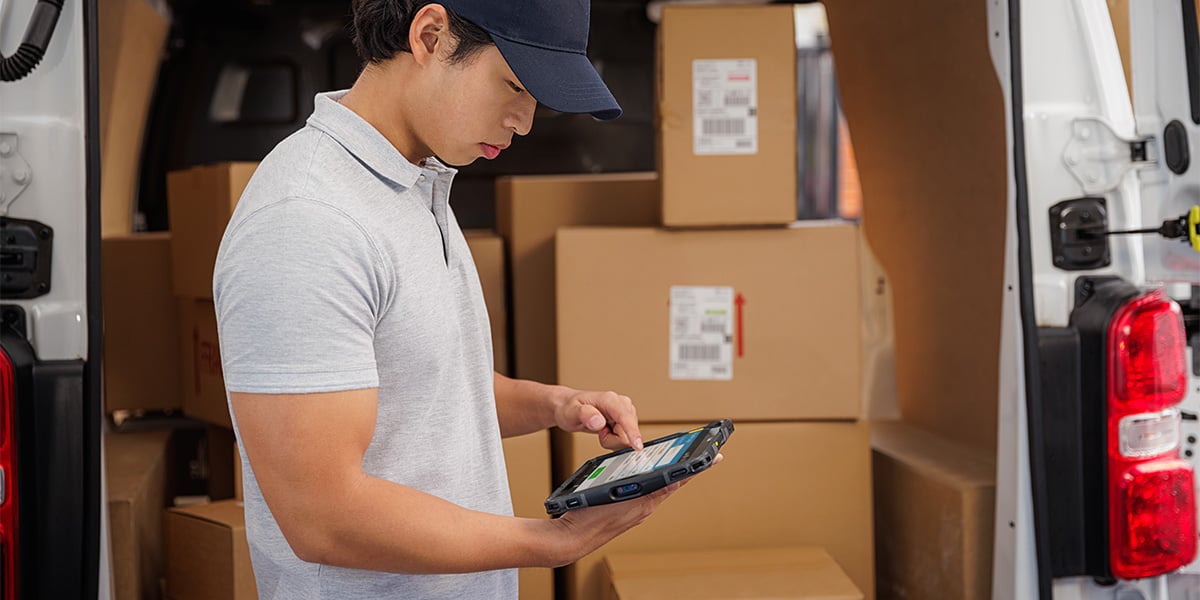
This guide explains the most crucial decision factors when selecting a rugged tablet - from IP ratings to operating systems.

This guide explains what mobile computing device IP ratings means, and how IP65, IP67, and IP68 rate protection against dust and various water tests.
Welcome, ID Card Group customers!
On September 24th, IDCardGroup.com transitioned to Levata.com. You still have access to the ID solutions you rely on, along with a broader selection of data capture and technology solutions.
What you can expect:
Questions? Call 1-833-353-8282.
Thank you for choosing Levata.
Welcome, IT Planet customers!
On September 24th, ITPlanet.com transitioned to Levata.com. You still have access to the products you rely on, along with a broader selection of data capture and technology solutions.
What you can expect:
Questions? Call 1-833-353-8282.
Thank you for choosing Levata.
Welcome, Barcode Planet customers!
On September 24th, BarcodePlanet.com transitioned to Levata.com. You still have access to the products you rely on, along with a broader selection of data capture and technology solutions.
What you can expect:
Questions? Call 1-833-353-8282.
Thank you for choosing Levata.