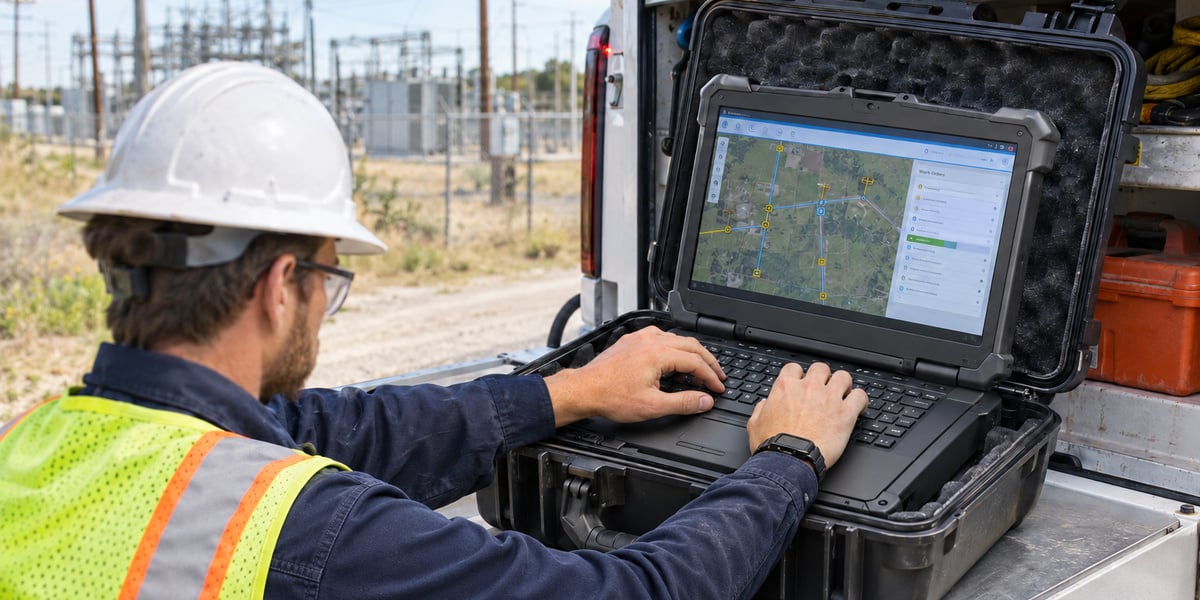
The Best Rugged Laptops by Use Case
Find the best rugged laptop for your work environment. Compare fully rugged, semi-rugged and ruggedized models by rating, display, battery and price.

My Cart
—
Incl. VAT
Author: Mike Vaughn
As a retailer, you put time, resources, and energy into increasing revenue and protecting profit. But retail shrinkage, retail theft, and retail fraud are working against you in maximizing the bottom line. The Appriss Retail 2026 Total Retail Loss Benchmark Report estimates that the retail industry experiences $90 billion per year in shrink, and about $26 billion comes from employee theft, $19 billion from inventory errors, and $12 billion from operational inefficiencies, which are all preventable. But to minimize shrinkage with root causes linked to retail operations, you need accurate, timely data that helps you understand how losses occur. That makes inventory accuracy an important foundation for effective retail loss prevention.
Inaccurate inventory data creates a hurdle to determining whether missing products resulted from retail theft, fraud, damage, or process errors. When inventory data does not reflect what actually sits on shelves and in stock rooms, you lose visibility into where losses occur.
Consider what can happen without real-time inventory visibility:
Inaccurate inventory data affects everything from customer experiences and sales to operational efficiency. But when it comes to retail loss prevention, you have no way to tell whether shrinkage is coming from theft, poor recordkeeping, or product damage. Accurate, real-time inventory data can change that.
Real-time inventory tracking with radio-frequency identification (RFID) technology can give you continuous inventory visibility instead of the periodic snapshot that manual counts provide:
Improving inventory accuracy is an important first step, but retail technology, along with real-time inventory data collection solutions, can help you fight back against various types of fraud and theft.
You can use point of sale (POS) system data to verify that a returned product matches a legitimate purchase. Serial-number tracking can provide additional protection for high-value products, and AI analytics and machine learning can identify unusual behavior, such as repeated returns of high-value merchandise that can indicate that the person making the return is attempting fraud. It's a problem worth solving. Appriss Retail estimates that $100 billion of the $706 billion in consumer returns in 2025 was lost to returns fraud and abuse.
POS analytics can help you identify unusual patterns at the point of sale, like excessive voids, refunds, or discounts, that can indicate an employee is stealing. Cameras can provide another source of information. You can also monitor receiving areas and stock rooms and let employees know you're watching.
RFID is a common retail loss prevention tool, alerting managers when an item that still has an RFID tag passes by a reader at the door. AI-powered systems can also decrease losses at the self-checkout, detecting missed scans or barcode switching. These tools can give you actionable information without requiring you to manually sort through hours of video.
Stopping financial losses from retail fraud, theft, and shrinkage directly improves profitability, but retail loss prevention can also improve store operations and customer experiences.
Oxford Economics research shows that retailers that implement solutions providing real-time inventory data reduce shrinkage, waste, and overall loss by 57%. They also have a 51% greater ability to detect hidden product losses, and 43% of them saw a decrease in fraud.
A successful retail loss prevention strategy starts with identifying where and why losses occur. This starts with a real-time view of inventory, enabled by a reliable network to keep RFID readers connected. You'll benefit from working with an experienced retail solution provider partner that begins implementation with a comprehensive site survey to identify and eliminate blind spots that can undermine connectivity. You can also rely on your retail technology provider partner for network monitoring, device management, help desk, and lifecycle services to ensure maximum system uptime without adding a burden on internal IT resources.
Levata has helped numerous retailers plan, procure, implement, and manage end-to-end systems that help them operate successfully and decrease the risks from retail fraud, theft, and shrinkage. Contact us to learn more.
About the Author: Mike Vaughn is a digital transformation leader with more than a decade of global experience helping retailers modernize operations through strategic technology adoption. As a Senior Director of Enterprise Sales at Levata, he works closely with retail organizations to design and implement solutions that enhance the shopper experience while improving operational visibility across stores and supply chains. Vaughn partners with customers to deploy mobility, data capture, and automation technologies that streamline workflows, improve inventory accuracy, and support seamless omnichannel retail strategies, from the sales floor to fulfillment. His customer-first approach focuses on helping retailers use connected technology and intelligent insights to deliver faster, more convenient, and more personalized shopping experiences.
Find the best rugged laptop for your work environment. Compare fully rugged, semi-rugged and ruggedized models by rating, display, battery and price.
Rising costs, competition, and customer expectations keep squeezing retail margins. Learn how inventory visibility, workforce optimization, supply chain insights, and data-driven decisions help retailers protect profitability for the long term.
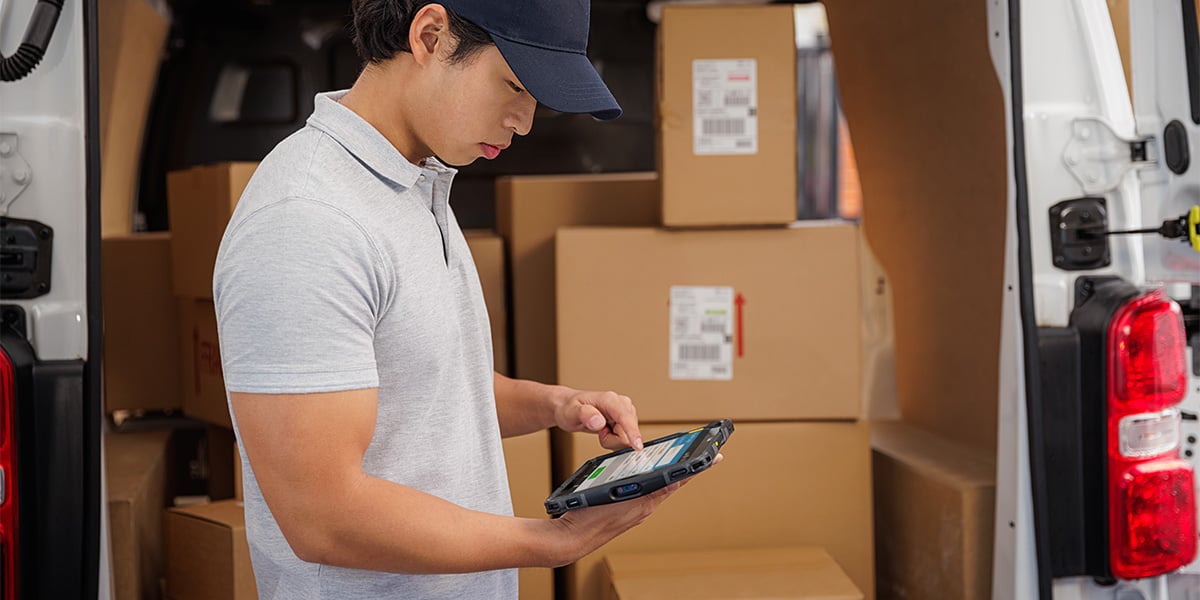
This guide explains the most crucial decision factors when selecting a rugged tablet - from IP ratings to operating systems.
Welcome, ID Card Group customers!
On September 24th, IDCardGroup.com transitioned to Levata.com. You still have access to the ID solutions you rely on, along with a broader selection of data capture and technology solutions.
What you can expect:
Questions? Call 1-833-353-8282.
Thank you for choosing Levata.
Welcome, IT Planet customers!
On September 24th, ITPlanet.com transitioned to Levata.com. You still have access to the products you rely on, along with a broader selection of data capture and technology solutions.
What you can expect:
Questions? Call 1-833-353-8282.
Thank you for choosing Levata.
Welcome, Barcode Planet customers!
On September 24th, BarcodePlanet.com transitioned to Levata.com. You still have access to the products you rely on, along with a broader selection of data capture and technology solutions.
What you can expect:
Questions? Call 1-833-353-8282.
Thank you for choosing Levata.