
RFID Inventory Management: How Warehouses and Retail Get Real Time Counts
RFID inventory management cuts cycle counts from hours to minutes. See how warehouses and stores use it, what hardware to buy, and factors to know.

My Cart
—
Incl. VAT

Author: Jared Carter
Manufacturers have a highly persuasive reason to execute a knowledge capture strategy: Baby boomers are aging out of the workforce. The youngest of the 73 million baby boomers in the U.S. will turn 62 in 2026, making them eligible for retirement and likely to leave the workforce within 5 years. Those workers face a “retirement cliff,” which, in financial terms, means they’re fully vested and have little incentive to continue to work. However, for employers, that cliff is the rapid loss of seasoned employees and a high risk of losing institutional knowledge. On the edge of the cliff, manufacturers need to have a knowledge capture strategy and the technology to support it.
Suddenly finding that mission-critical information left along with a retiree can bring production to a halt. However, failing to capture that knowledge is more than an operational barrier. It’s a threat to revenues and profits in several ways:
Planning and executing an effective knowledge capture strategy will not only ensure operational continuity. They’re also key to protecting revenues, profits, and the bottom line.
To protect a business heading toward the baby boomer retirement cliff, manufacturers need a holistic approach. Business leadership and stakeholders must identify the critical knowledge essential to production and other lines of business. The next step is preserving information before employees retire. The lead time up to the separation date will dictate options.
When retirements are planned far in advance, manufacturers have time to consider having long-time employees mentor and train newer employees. This can include shadowing, formal training sessions, or supervision upskilling. Retirees can also document processes and contribute to a knowledge base, either by creating searchable assets or video instructions. Manufacturers can incentivize retiree participation for the best results.
In many cases, there isn’t time, or it’s not financially feasible, for employees to spend weeks or months training newer employees. Digitizing processes allows manufacturers to capture information to guide future employees. Transitioning from manual and paper-based processes to apps has the added benefit of increasing younger, digital-native employees’ job satisfaction by letting them work in a way that’s comfortable for them. When apps guide a process step by step and employees can use mobile devices to access information on demand, there’s less reliance on seasoned employees for the answers.
Digitizing processes also allows manufacturers to optimize workflows and identify and correct bottlenecks that limit productivity. Some processes, like quality assurance enhanced by artificial intelligence (AI), will become more efficient and accurate than even when an experienced, long-time employee managed them.
If manufacturers find themselves in a time crunch before retirements, they can consider softening the separation date. Retirees may be open to consulting or part-time work for a period. It may make the transition to retirement easier for employees, giving them a continued sense of purpose while they plan their next chapter, while also giving current employees a place to turn for answers.
When manufacturers capture knowledge directly from retirees before they leave or by capturing data with digital processes, they will have volumes of data to manage. Instead of manually searching through documentation, policies, and processes, manufacturers can leverage AI. Generative AI can search and summarize documentation. It can also fill gaps so that documentation is complete. AI can also guide users through decision-making based on established workflows and policies. In an era of persistent labor shortages, when replacing retirees will likely be a challenge, implementing AI can save time and give the current workforce easy access to information.
Preserving institutional knowledge will make life easier for employees on the front lines, from training to day-to-day operations. However, it also has benefits for supervisors. Once knowledge is digitized, it becomes measurable. Supervisors gain data they can analyze to gauge employee performance, completion rates, and errors. Analysis can also help identify bottlenecks and their root causes so they can optimize processes. With digitized processes, improvement is data-driven and continuous.
When a manufacturer deploys technology to digitize processes and capture knowledge, it’s important to align with a partner that will help with workflow analysis, site surveys, and knowledge mapping. Your partner should also have the expertise and resources to manage device deployment, integration, configuration, ongoing device management, and maintenance, so supervisors can stay focused on their core responsibilities.
Levata will partner with you to implement and support the technology you need to execute your knowledge capture and digital transformation strategy. Levata TrueSupport offers help desk, repair, and lifecycle services, and we offer managed services for manufacturing solutions, enterprise mobility, networking, and infrastructure implementation and ongoing support. Choosing solutions from Levata also gives your business the advantage of a long-term relationship with a partner dedicated to your success, rather than just a technology implementation project.
Contact us to start the conversation about strategy for successful knowledge capture and preserving the information that made your enterprise successful.
About the Author:
Jared Carter, Senior Director of Enterprise Sales at Levata, works closely with organizations to design and deliver manufacturing technology strategies that improve operational performance across the entire supply chain. With deep experience helping manufacturers modernize frontline operations, he partners with customers to implement mobility, automation, and data-capture solutions that enhance workforce productivity, increase inventory and asset visibility, and streamline workflows from receiving to production to distribution. At Levata, Jared focuses on helping manufacturers leverage connected devices, real-time data, and lifecycle support services to drive greater efficiency, accuracy, and operational agility across their facilities.
RFID inventory management cuts cycle counts from hours to minutes. See how warehouses and stores use it, what hardware to buy, and factors to know.
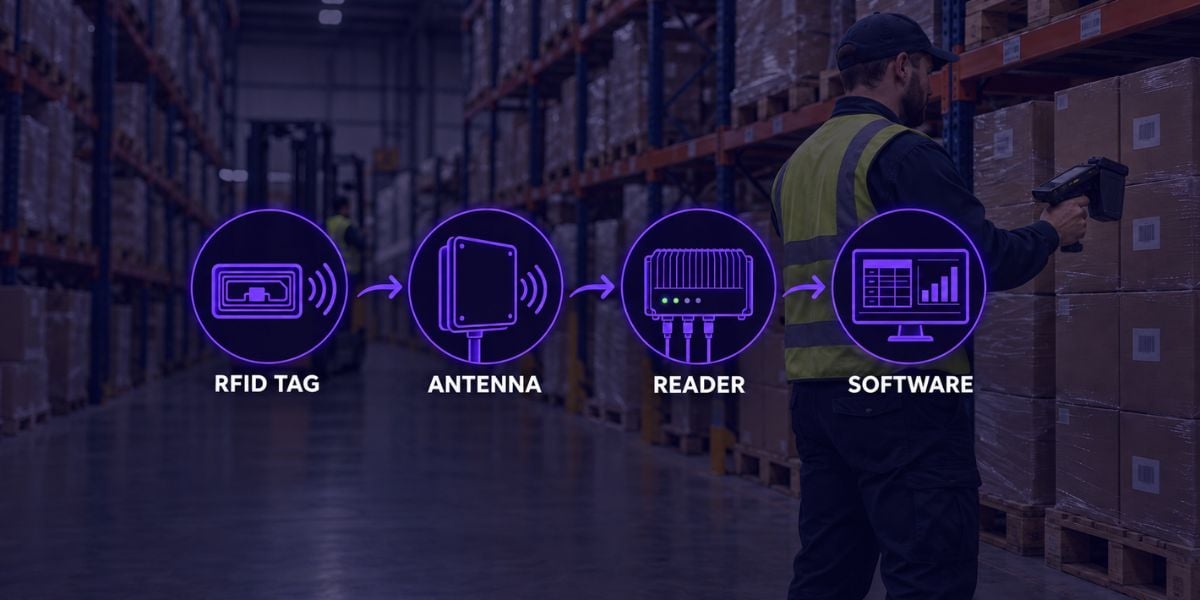
How do RFID tags work? See how the chip, antenna and power source work together, then match a tag to your surface and read range.
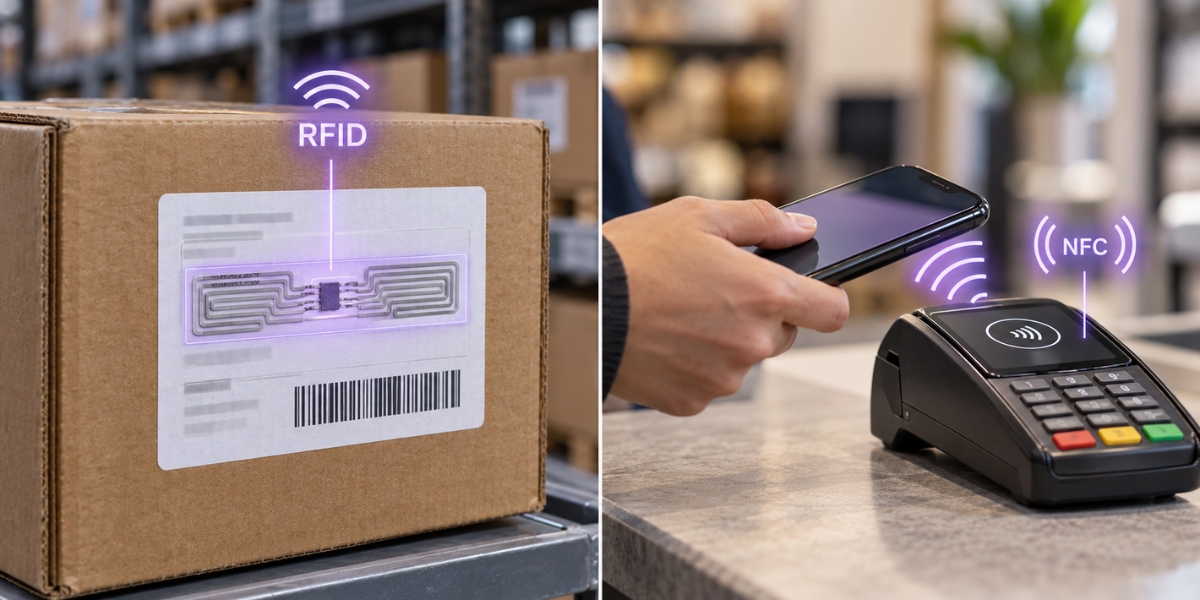
See how RFID and NFC differ on range, standards, and use, plus which one fits inventory tracking versus payments and access.
Welcome, ID Card Group customers!
On September 24th, IDCardGroup.com transitioned to Levata.com. You still have access to the ID solutions you rely on, along with a broader selection of data capture and technology solutions.
What you can expect:
Questions? Call 1-833-353-8282.
Thank you for choosing Levata.
Welcome, IT Planet customers!
On September 24th, ITPlanet.com transitioned to Levata.com. You still have access to the products you rely on, along with a broader selection of data capture and technology solutions.
What you can expect:
Questions? Call 1-833-353-8282.
Thank you for choosing Levata.
Welcome, Barcode Planet customers!
On September 24th, BarcodePlanet.com transitioned to Levata.com. You still have access to the products you rely on, along with a broader selection of data capture and technology solutions.
What you can expect:
Questions? Call 1-833-353-8282.
Thank you for choosing Levata.