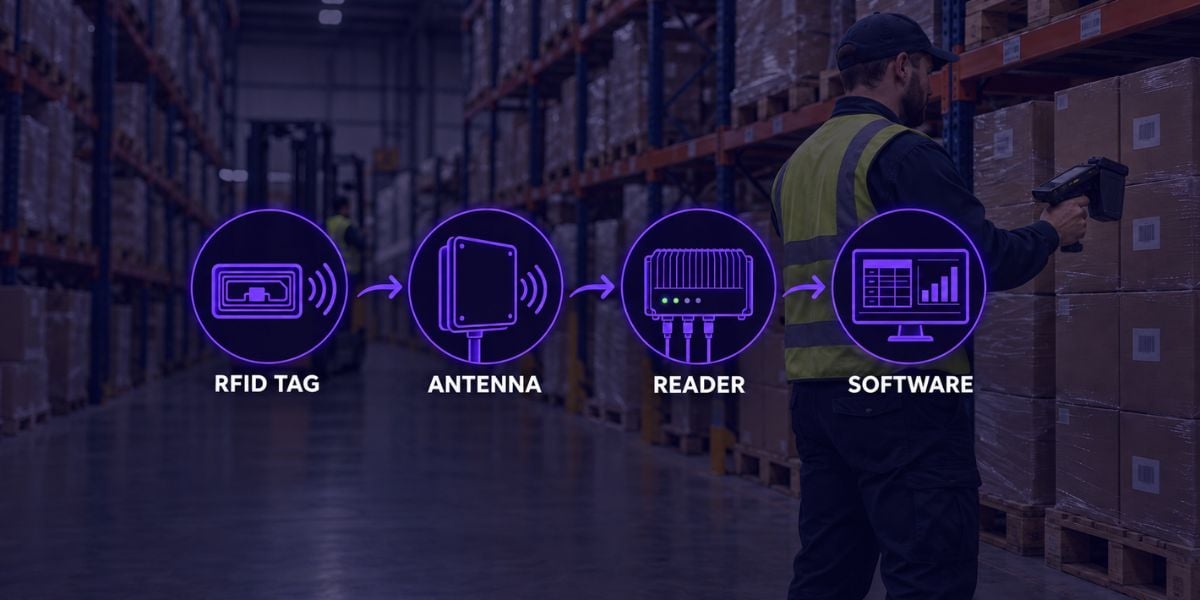
How Do RFID Tags Work, and Which Type Do You Need?
How do RFID tags work? See how the chip, antenna and power source work together, then match a tag to your surface and read range.

My Cart
—
Incl. VAT

Author: Mike Vaughn
Retailers tend to have a false sense of security when it comes to inventory accuracy. They schedule cycle counts and reconcile what’s in the inventory management system with what’s on the shelves. Unfortunately, the difference is more than just “the cost of doing business.” It’s a threat to profitability that few retailers can survive. Traditional retail inventory management processes are insufficient to provide the level of accuracy necessary for efficient operations, shrinkage control, and customer satisfaction.
Market trends, customer expectations, and business survival in a tough economy all require retailers to ensure inventory accuracy. These reasons build a compelling business case for upgrading retail inventory management processes.
The U.S. Census Bureau reports total ecommerce sales in 2025 at an estimated $1.223 trillion, a 5.4% increase from 2024, while total retail sales increased at a rate of 3.5%. For retailers to meet increasing ecommerce demand, stores often act as micro-fulfillment centers, which increases their dependence on real-time inventory accuracy. An expanding number of SKUs and product movement from the stockroom to shelves or picked for ecommerce order fulfillment add to complexity that traditional retail inventory management processes can’t address.
Customers demand transparency into available inventory so they can make informed purchasing decisions. They won’t tolerate inaccurate inventory data that leads to buy online, pickup in store (BOPIS) delays or order fulfillment errors. Retail competitiveness hinges on giving consumers access to accurate product information and availability, updated in real time. Not meeting this expectation can lead to lost customers and lost revenues. Oxford Economics reports that accurate inventory data improves customer service metrics by 61%.
Retailers are facing a continuing labor shortage. The U.S. Bureau of Labor Statistics reported 737,000 job openings in retail in March 2026, up from 498,000 in March 2025. Accurate inventory impacts the entire organization, from employees responsible for customer-facing roles and inventory counts to decision-makers in the C-suite. Oxford Economics research shows that accurate inventory improves execution completion rates by 63%, helping retailers to operate more efficiently with fewer people.
Inaccurate inventory impacts every area of retail operations. Outdated processes and a lack of visibility into stock on hand:
Any one of these issues causes a decrease in profitability and creates a barrier to growth. However, together, they can threaten a business’s viability. Still, retailers that continue to rely on cycle counts may not have a true picture of inventory. The bottom line: With inaccurate inventory, you’re losing money, and you don’t even realize it.
Upgrading to real-time, continuous inventory tracking solves the six main challenges with traditional retail inventory management processes based on cycle counts.
In a competitively charged environment, retailers need to control shrinkage, losses, and opportunity costs and find ways to enhance customer experiences that lead to loyalty and business growth. Retailers focused on success will modernize their processes. With the right solution, retailers can achieve 98% inventory accuracy, slashing losses and increasing customer satisfaction.
Reaching that goal takes more than selecting the right retail technology. Retailers will benefit from working with a Digital Transformation Partner that works with them from design to deployment and support. A leading partner has expertise across the full solution lifecycle, including:
A best-fit real-time tracking solution and an experienced partner will unlock the inventory accuracy and visibility that retailers need to stop losses and operate profitably. For a deeper dive into this topic, download our ebook: The Billion Dollar Blindspot.
About the Author:
Mike Vaughn is a digital transformation leader with more than a decade of global experience helping retailers modernize operations through strategic technology adoption. As a Senior Director of Enterprise Sales at Levata, he works closely with retail organizations to design and implement solutions that enhance the shopper experience while improving operational visibility across stores and supply chains. Vaughn partners with customers to deploy mobility, data capture, and automation technologies that streamline workflows, improve inventory accuracy, and support seamless omnichannel retail strategies—from the sales floor to fulfillment. His customer-first approach focuses on helping retailers use connected technology and intelligent insights to deliver faster, more convenient, and more personalized shopping experiences.
How do RFID tags work? See how the chip, antenna and power source work together, then match a tag to your surface and read range.
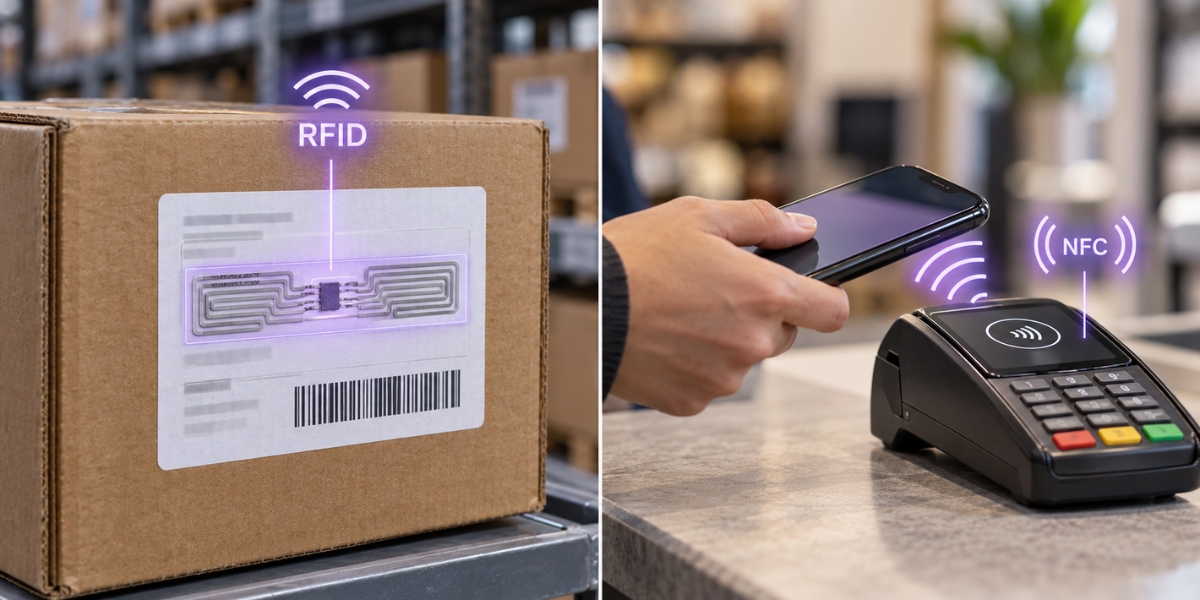
See how RFID and NFC differ on range, standards, and use, plus which one fits inventory tracking versus payments and access.
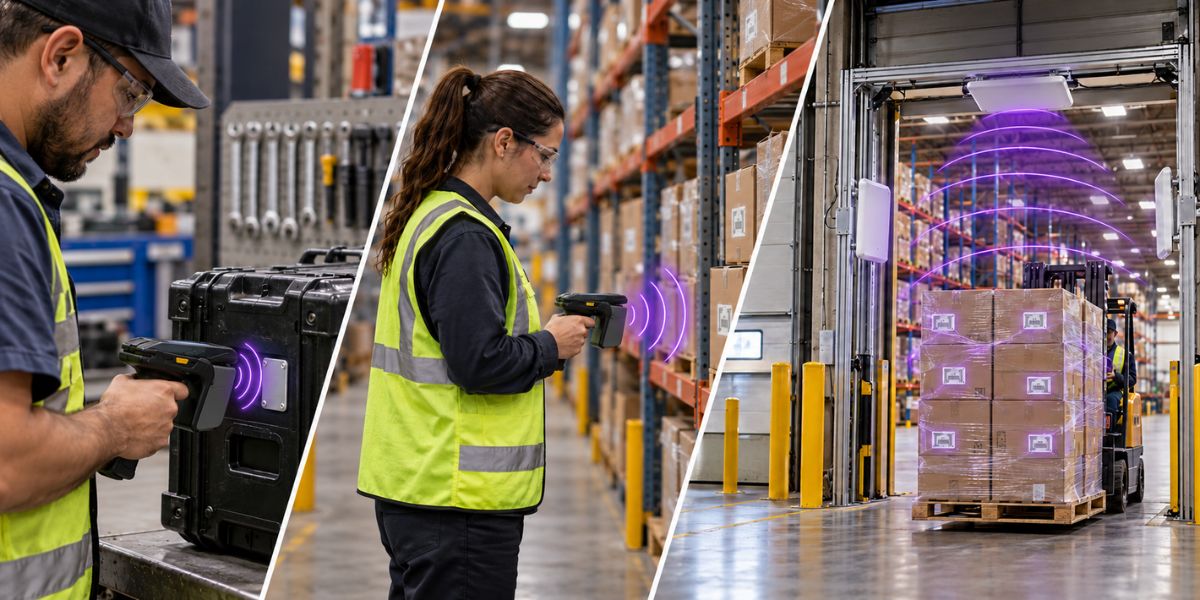
Compare LF, HF, and UHF RFID on range, standards, regulation, and best use, with a reference chart built to save and cite.
Welcome, ID Card Group customers!
On September 24th, IDCardGroup.com transitioned to Levata.com. You still have access to the ID solutions you rely on, along with a broader selection of data capture and technology solutions.
What you can expect:
Questions? Call 1-833-353-8282.
Thank you for choosing Levata.
Welcome, IT Planet customers!
On September 24th, ITPlanet.com transitioned to Levata.com. You still have access to the products you rely on, along with a broader selection of data capture and technology solutions.
What you can expect:
Questions? Call 1-833-353-8282.
Thank you for choosing Levata.
Welcome, Barcode Planet customers!
On September 24th, BarcodePlanet.com transitioned to Levata.com. You still have access to the products you rely on, along with a broader selection of data capture and technology solutions.
What you can expect:
Questions? Call 1-833-353-8282.
Thank you for choosing Levata.