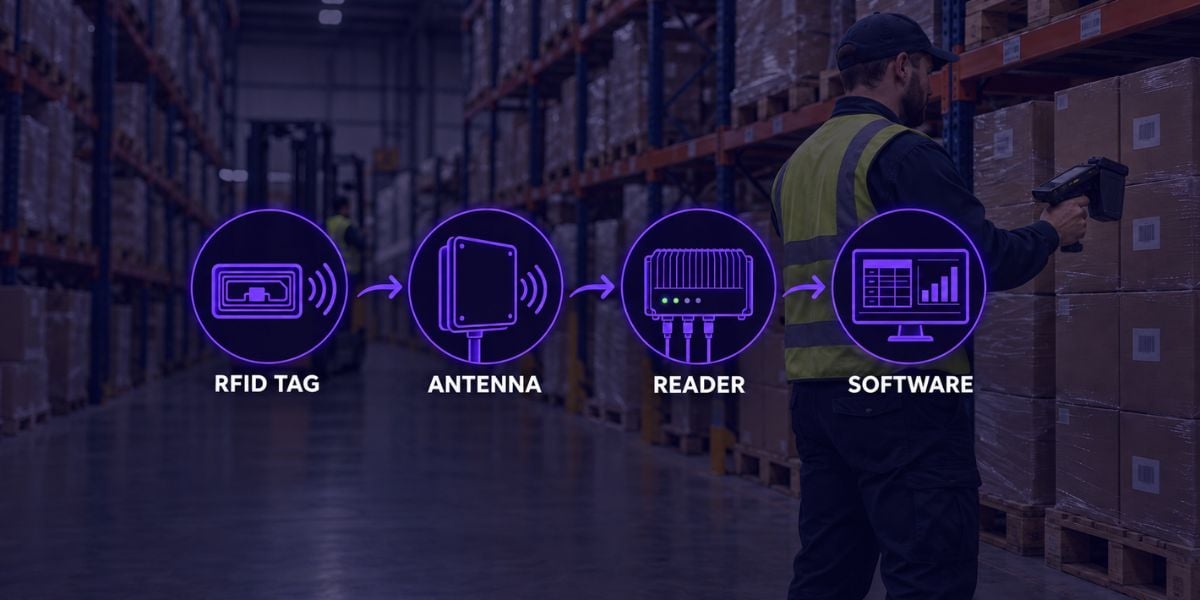
How Do RFID Tags Work, and Which Type Do You Need?
How do RFID tags work? See how the chip, antenna and power source work together, then match a tag to your surface and read range.

My Cart
—
Incl. VAT
Author: Matt Cunningham
Supply chain visibility has never been more important. Planning how goods move, both the route and time that shipments take, has always been a factor in transportation and logistics (T&L) companies meeting service level agreements (SLAs). However, today, just a general idea of where shipments should be at any given time is not enough to meet customer expectations and keep costs low. Organizations need to know exactly where shipments are, where they're going, and when distribution centers and end customers can expect their products. Our supply chain transparency solutions allow T&L companies to provide those answers, address unexpected issues with agility, and keep shipments on schedule.
Supply chain visibility is the answer to the challenges T&L companies increasingly encounter, both in their business and on the way to delivering shipments from point A to point B:
T&L companies need a reliable method to collect the data necessary to meet customer demands for transparency, adapt to unexpected issues, and successfully meet SLAs. Achieving end-to-end supply chain visibility takes more than recording bill of lading (BOL) numbers in an Excel sheet at certain chokepoints. Today's organizations need continuous tracking and locationing, data sharing and analysis, and connected frontline employees, from the manufacturer or supplier to proof of last-mile delivery. Solutions for T&L companies that build total visibility include the following:
Tracking inventory with barcode or radio-frequency identification (RFID) technology automates data collection and instantly updates the warehouse management system (WMS). It also gives businesses the opportunity to share information on what's in stock, what's picked, and what's staged for shipment, with all supply chain partners. This technology has the added benefit of easier, more accurate cycle counting.
T&L companies can automate pallet verification with RFID or machine vision to ensure shipment accuracy. Increasing QC accuracy not only lowers costs from mis-shipments, but it also ensures that all supply chain partners have the right information on where orders are and where they're going.
Companies have several options for shipment tracking and locationing. Technologies, including Internet of Things (IoT) systems, RFID data capture, and global positioning systems (GPS), help organizations know exactly where shipments or individual orders are. IoT sensors can also monitor the temperature, humidity, or other conditions that items are exposed to, to ensure customers receive quality items. Companies can also use geofencing to receive notifications when an item or pallet passes a certain checkpoint, automating chain of custody for auditing and compliance or to tell a complete source-to-customer story.
For track-and-trace systems to work, each site, facility, or yard where the company needs to capture data requires a site survey and wireless network optimization to ensure reliable performance.
RFID-enabled tracking can save time for drivers by automating proof of delivery (POD) and sharing information immediately with all stakeholders. Automated POD can also generate a record of every human or process that touches the shipment. This information can be valuable in resolving disputes about product authenticity or quality.
To achieve end-to-end supply chain visibility, companies need to equip the frontline with technology, including rugged mobile computers, wearables, or vehicle-mount devices that keep employees connected to management systems and each other. With these solutions, employees can collect or input data and update systems as they work for a real-time view of operations.
In addition to deploying mobile device fleets, companies should also implement a way to manage them. Mobile device management (MDM)/unified device management (UDM) helps companies maximize device uptime, ensure device and data security, and allow users to easily access technical support when necessary. A total solution will also include device lifecycle management for practically managing, repairing, redeploying, and retiring devices with no disruption to supply chain visibility or operations.
Supply chain visibility solutions collect massive data volumes, which hold the key to operating more efficiently and profitably. AI can analyze data quickly, spot patterns and anomalies, and allow T&L operators to make intelligent decisions before issues or delays occur. Making the best use of the data that supply chain visibility solutions collect gives companies benefits that directly impact the bottom line, including:
Industry analysis shows there's work to be done. Zebra Technologies research has found that only 16% of enterprises have real-time visibility, and a primary barrier is the inability to keep up with technological innovations.
Levata offers solutions that we can tailor to your operation to help you achieve real-time supply chain visibility. We can also help you leverage artificial intelligence (AI) to analyze data, automate processes, and respond with agility to keep shipments on track. Contact us to learn more.
About the Author:
Matt Cunningham, Vice President of Enterprise Sales at Levata, is a solution sales and leadership professional with a strong track record of helping organizations across transportation, logistics, and manufacturing environments implement technology solutions that improve operational performance. Experienced in complex solution selling and business development, Matt works closely with stakeholders across all levels of an organization to deliver measurable results in supply chain efficiency, visibility, and workforce productivity. Passionate about the intersection of people, process, and technology, Matt focuses on helping organizations build cultures and systems that enable long-term success in rapidly evolving operational environments.
How do RFID tags work? See how the chip, antenna and power source work together, then match a tag to your surface and read range.
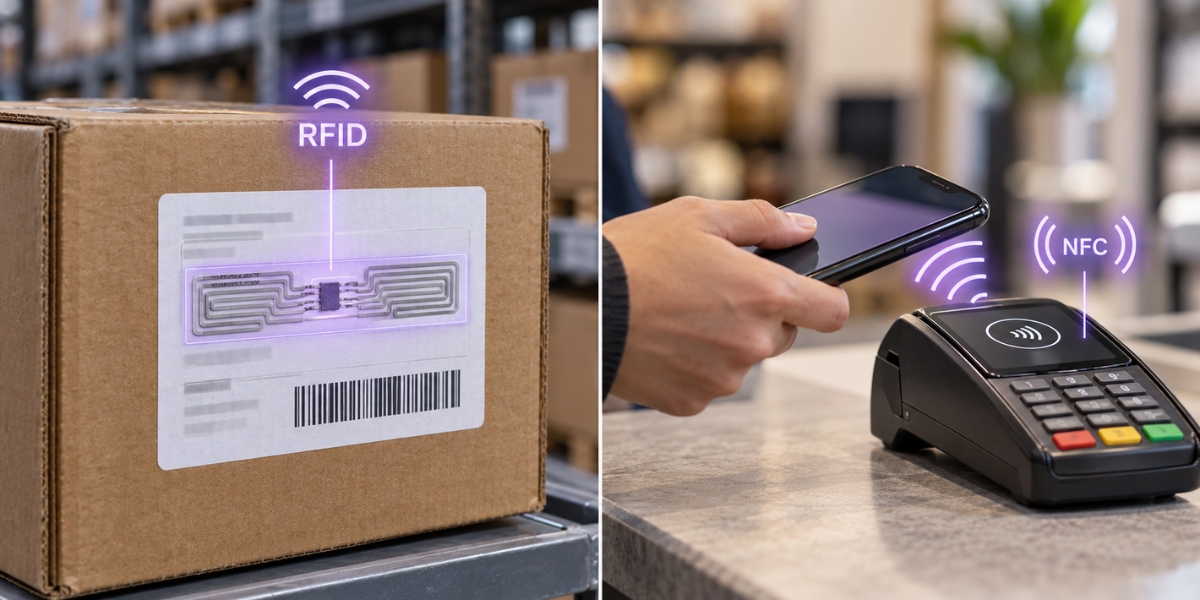
See how RFID and NFC differ on range, standards, and use, plus which one fits inventory tracking versus payments and access.
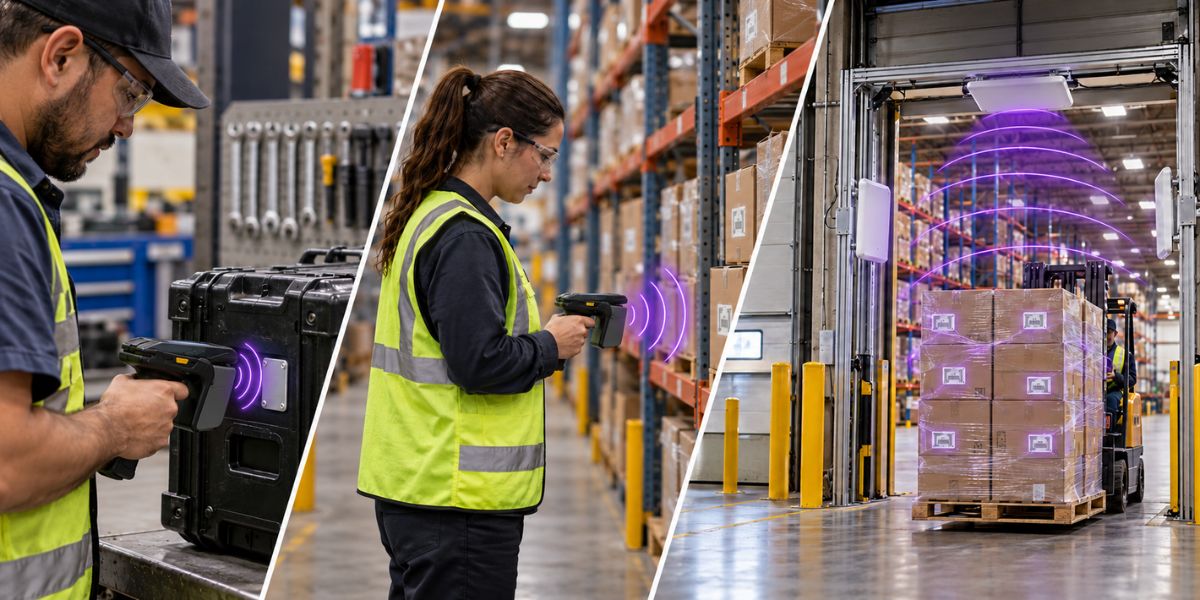
Compare LF, HF, and UHF RFID on range, standards, regulation, and best use, with a reference chart built to save and cite.
Welcome, ID Card Group customers!
On September 24th, IDCardGroup.com transitioned to Levata.com. You still have access to the ID solutions you rely on, along with a broader selection of data capture and technology solutions.
What you can expect:
Questions? Call 1-833-353-8282.
Thank you for choosing Levata.
Welcome, IT Planet customers!
On September 24th, ITPlanet.com transitioned to Levata.com. You still have access to the products you rely on, along with a broader selection of data capture and technology solutions.
What you can expect:
Questions? Call 1-833-353-8282.
Thank you for choosing Levata.
Welcome, Barcode Planet customers!
On September 24th, BarcodePlanet.com transitioned to Levata.com. You still have access to the products you rely on, along with a broader selection of data capture and technology solutions.
What you can expect:
Questions? Call 1-833-353-8282.
Thank you for choosing Levata.