Epson
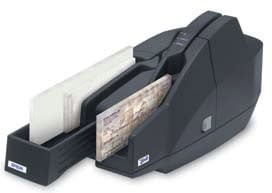
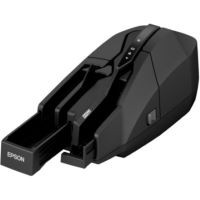
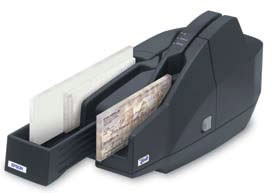
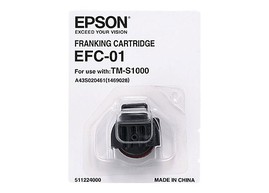
EPSON, TM-S1000IINW, CAPTUREONE CHECK SCANNER, 60DPM, 2 POCKETS, EPSON BLACK, USB & ETHERNET, POWER SUPPLY,FRANKING CARTRIDGE, CD, (CAPTURE ONE)
SKU:
A41CL16012
EPS.HARDWARE.PRINTERS.RECEIPT.MULTI-STATION
Select model

Description
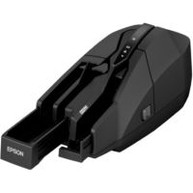
The Epson TM-S1000II is a desktop check scanner built for financial institutions, bank teller stations, and back-office operations that need reliable, high-throughput check processing. Using a CIS (Contact Image Sensor), it captures images at resolutions up to 200 x 200 dpi and processes checks at either 30 or 60 documents per minute, handling both personal and business-size checks with ease. Its two-pocket exit design automatically segregates error checks, reducing manual intervention and keeping transaction accuracy high. With a 100-sheet automatic document feeder, USB 2.0 connectivity, and a compact footprint of 176 mm x 160 mm x 355 mm, the TM-S1000II fits comfortably in space-constrained environments while delivering the throughput demanding operations require. A 2-year limited warranty rounds out the value proposition.
FAQs
How fast does the Epson TM-S1000II Check Scanner process checks, and can I choose the speed that fits my volume?
The TM-S1000II is available in configurations running at either 30 documents per minute or 60 documents per minute, so you can match throughput to your operation's workload.
What image resolution does the Epson TM-S1000II produce, and does it support multiple resolution settings?
It captures check images at 100 x 100 dpi, 120 x 120 dpi, or 200 x 200 dpi, giving you flexibility to balance file size against image quality for your deposit or back-office workflow.
How does the Epson TM-S1000II handle checks that fail scanning or contain errors?
The scanner uses a two-pocket exit design that automatically routes error checks into a separate pocket, keeping good items and exceptions physically segregated without manual sorting.
-
Manufacturer: Not specified
-
Price: Not specified
-
Target Industry: Not specified
-
Touch: Not specified
-
POS: Not specified
-
Multilane Retail: Not specified
-
Large Format: Not specified
-
Equipment Format: Not specified
-
Screen size: Not specified
-
Connection: Not specified
-
Cash drawer type: Not specified
-
Screen type: Not specified
-
Display Resolution: Not specified
-
Brightness: Not specified
-
Manufacturer: Not specified
-
Price: Not specified
-
Target Industry: Not specified
-
Touch: Not specified
-
POS: Not specified
-
Multilane Retail: Not specified
-
Large Format: Not specified
-
Equipment Format: Not specified
-
Screen size: Not specified
-
Connection: Not specified
-
Cash drawer type: Not specified
-
Screen type: Not specified
-
Display Resolution: Not specified
-
Brightness: Not specified
-
Manufacturer: Not specified
-
Price: Not specified
-
Target Industry: Not specified
-
Touch: Not specified
-
POS: Not specified
-
Multilane Retail: Not specified
-
Large Format: Not specified
-
Equipment Format: Not specified
-
Screen size: Not specified
-
Connection: Not specified
-
Cash drawer type: Not specified
-
Screen type: Not specified
-
Display Resolution: Not specified
-
Brightness: Not specified
-
Manufacturer: Not specified
-
Price: Not specified
-
Target Industry: Not specified
-
Touch: Not specified
-
POS: Not specified
-
Multilane Retail: Not specified
-
Large Format: Not specified
-
Equipment Format: Not specified
-
Screen size: Not specified
-
Connection: Not specified
-
Cash drawer type: Not specified
-
Screen type: Not specified
-
Display Resolution: Not specified
-
Brightness: Not specified
29%
Epson
EPSON, TM-S1000II, CAPTUREONE CHECK SCANNER, 60DPM, 2 POCKETS, EPSON BLACK, POWER SUPPLY, USB CABLE, FRANKING CARTRIDGE, CD, (CAPTURE ONE)
A41CL16002
In stock
18%
Epson
EPSON, TM-S1000II, CAPTUREONE CHECK SCANNER, 30DPM, 2 POCKETS, EPSON BLACK, POWER SUPPLY, USB CABLE, FRANKING CARTRIDGE, CD, (CAPTURE ONE)
A41CL16001
In stock
29%
Epson
EPSON, TM-S1000IINW, CAPTUREONE CHECK SCANNER, 60DPM, 2 POCKETS, EPSON BLACK, USB & ETHERNET, POWER SUPPLY,FRANKING CARTRIDGE, CD, (CAPTURE ONE)
A41CL16012
In stock
29%
Epson
EPSON, TM-S1000IINW, CAPTUREONE CHECK SCANNER, 30DPM, 2 POCKETS, EPSON BLACK, USB & ETHERNET, POWER SUPPLY,FRANKING CARTRIDGE, CD, (CAPTURE ONE)
A41CL16011
Item on backorder — chat for lead time
Epson
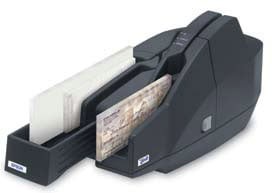
Upgrade, 30 DPM to 90 DPM) for the CaptureOne
A41A266A8801
Item on backorder — chat for lead time