Select model

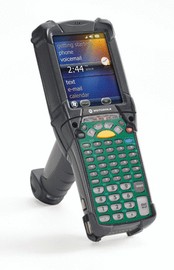
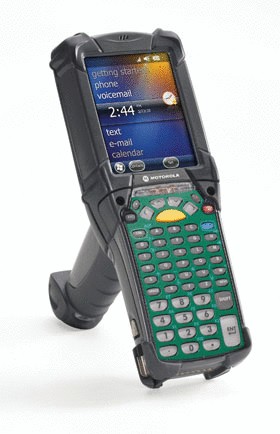
The Zebra MC9000 is a family of enterprise handheld mobile computers spanning multiple generations — the MC9090-G, the MC9190-G, and the MC9200 — each built for demanding data-capture work carried out by operators on the move. Across the family, buyers can select from a range of processors, wireless standards, scanning engines, operating systems, and keypad configurations to match the specific demands of their deployment.
Key Features:
- The MC9200 carries a dual-core 1GHz OMAP 4 processor, giving it the headroom to run graphics-intensive and complex enterprise applications simultaneously without performance compromise.
- Memory configurations available across the family range from 64MB RAM with 64MB Flash on the MC9090-G up to 1GB RAM with 2GB Flash on the MC9200, so buyers can match storage and runtime capacity to application weight.
- Operating system support spans Windows Mobile 5.0 Premium Edition, Windows Mobile 6.1 Classic, Windows Embedded Handheld 6.5.3, Windows Embedded Compact 7.0, Microsoft Windows CE 5.0, Microsoft Windows CE 6.0, and Android 4.4.4 with Mobility Extensions, giving IT teams the flexibility to standardize on whichever platform their application stack requires.
- Scanning engines available across the family include 1D laser, 1D laser long range, and multiple 1D/2D imager options — among them the SE4850 extended-range imager, the SE4500-DL for driver's license parsing, and the SE4500-HD for direct part marks — so the correct engine can be matched to the read environment rather than accepted as a compromise.
- The MC9200 supports 802.11a/b/g/n WLAN, delivering higher throughput and greater capacity on the wireless network compared with the 802.11a/b/g found on earlier models in the family.
- Bluetooth 2.1 with Enhanced Data Rate, available on the MC9190-G and MC9200, supports wireless peripheral connections at up to 3 Mbps over a more secure link than earlier Bluetooth versions.
- The MC9200 carries a 3.7 in. VGA color touchscreen with a hardened glass surface, providing consistent readability across varied lighting conditions and added resistance to the wear that accumulates in high-cycle environments.
- An integrated UHF RFID tag on the MC9190-G and MC9200 enables automated device check-in and check-out, giving operations managers visibility into which worker holds which device at any given time.
A Family Built for Generational Choice
The MC9000 series is structured so that each successive generation — the MC9090-G, the MC9190-G, and the MC9200 — raises the platform in processing power, wireless capability, scanning breadth, and OS flexibility. A buyer already invested in MC9090-G workflows can evaluate the MC9190-G or MC9200 as a forward path rather than a complete replacement, because the Zebra Mobility Platform Architecture advances from MPA 1.0 through MPA 2.0 to MPA 3.0 in a way that is designed to preserve existing application investments through cost-effective porting.
Processing Power Across Generations
The MC9090-G runs an Intel XScale PXA270 at 624 MHz. The MC9190-G steps up to a Marvell PXA320 at 806 MHz. The MC9200 moves to a dual-core 1GHz OMAP 4 processor. Each increase in compute headroom is aimed at keeping the device capable as enterprise applications grow in complexity and as graphical interfaces become standard in mobile workflows.
Memory Configurations to Fit Application Demands
Across the family, available RAM and Flash storage grow with each generation. The MC9090-G is available with 64MB or 128MB of RAM paired with 64MB or 128MB of Flash depending on the operating system selected. The MC9190-G is available at 256MB RAM with 1GB Flash or 512MB RAM with 2GB Flash. The MC9200 is available at 512MB RAM with 2GB Flash or 1GB RAM with 2GB Flash. Expansion storage on the MC9190-G and MC9200 is provided by a MicroSD slot supporting cards up to 32GB.
Operating System Flexibility and Swappability
The MC9090-G supports Windows Mobile 5.0 Premium Edition and Microsoft Windows CE 5.0. The MC9190-G adds Windows Mobile 6.1 Classic and allows the OS to be swapped between Windows Embedded Handheld and Windows CE variants in the field. The MC9200 extends that further: supported operating systems include Windows Embedded Handheld 6.5.3, Windows Embedded Compact 7.0, Microsoft Windows CE 6.0, and Android 4.4.4 with Mobility Extensions, and with an appropriate services plan, premium MC9200 models can be switched between all supported operating systems without a hardware change. For Android deployments, Zebra's Mobility Extensions add enterprise-class management and security capabilities on top of the base platform.
Scanning Engine Options to Match the Read Environment
Each generation of the MC9000 family offers a range of scan engine choices so that the device can be configured for the actual barcodes and distances a given operation presents. The MC9090-G is available with the SE1224 1D laser, the SE1524-ER 1D laser long-range engine, the SE4400 1D/2D imager, or the SE4400-HD imager for direct part marks. The MC9190-G adds the SE960 1D laser, the SE4500-SR 1D/2D imager, the SE4600 1D/2D long-range imager, and the SE4500-DL for driver's license parsing. The MC9200 brings the SE965 1D laser, the SE4750 1D/2D standard or mid-range imager, the SE4850 1D/2D extended-range imager, the SE4500-DL, and the SE4500-HD. The SE4850 is noted in the source documentation as capable of reading barcodes from as close as 3 in./7.6 cm to as far as 70 ft./21.3 m, and both the SE4850 and the SE4750 incorporate Zebra's PRZM Intelligent Imaging technology.
Wireless LAN Connectivity
The MC9090-G and MC9190-G support 802.11a/b/g WLAN. The MC9200 adds 802.11n, which provides greater bandwidth and the ability to support more concurrent users and applications on the same wireless infrastructure. For sites already running 802.11n access points, the MC9200 can take full advantage of that capacity without additional configuration overhead.
Bluetooth Connectivity
Bluetooth version 1.2 is present on the MC9090-G. The MC9190-G and MC9200 carry Bluetooth 2.1 with EDR (Enhanced Data Rate), which raises the wireless peripheral connection speed to up to 3 Mbps and adds security improvements over the earlier version. On the MC9190-G and MC9200, both StoneStreet and Microsoft Bluetooth stacks are available, allowing the IT team to select the stack that best suits its mobility management approach.
Display and Touchscreen Construction
The MC9090-G offers a 3.7 in. QVGA display in mono or color depending on the operating system chosen. The MC9190-G and MC9200 both carry a 3.7 in. VGA color display across all supported operating systems. Touchscreens are hardened on both the MC9190-G and MC9200, with the MC9200 noted as carrying increased hardness relative to the MC9190-G. The MC9200 also features a Gorilla Glass scanner exit window, providing additional durability at the point most likely to encounter contact with surfaces and labels during scanning.
Integrated UHF RFID for Device Tracking
The MC9190-G and MC9200 carry an integrated UHF RFID tag. When the site is equipped with RFID readers at entry and exit points, this tag allows automated check-in and check-out of individual devices, creating a record of which worker holds which unit. That visibility supports accountability for device care and return, and the source documentation notes it can also help prevent device loss at controlled access points.
Motion Sensing and Interactive Sensor Technology
Interactive Sensor Technology is present on the MC9190-G and MC9200. It enables dynamic screen orientation and provides access to accelerometer data for custom application development. It also allows the device to power down automatically when not in active use, and it records drop events for man-down application support — a capability relevant wherever device condition monitoring is part of the operational workflow.
Security Certification
FIPS 140-2 certification is present on the MC9190-G and MC9200, covering NIST-validated cryptographic use without requiring additional third-party supplicants. For organizations whose security or compliance policies mandate FIPS 140-2 validated encryption, this removes a layer of integration complexity from the deployment.
Keypad Configurations
The family supports multiple keypad layouts. Source documentation identifies 28-key, 38-key, 43-key, and 53-key configurations across the MC9000-K and MC9000-S variants, giving the buyer the choice of a compact numeric layout or a fuller alphanumeric keypad depending on the data-entry requirements of the application.

-
Manufacturer: Not specified
-
Price: Not specified
-
Storage Type: Not specified
-
Target Industry: Not specified
-
RFID: No
-
Operation System: Not specified
-
Rugged: Not specified
-
Equipment Format: Not specified
-
Data Capture: No
-
RAM/FLASH: Not specified
-
Battery Capacity: Not specified
-
Screen size: Not specified
-
GPS: No
-
Range: Not specified
-
Connection: Not specified
-
SSD: Not specified
-
Pin: Not specified
-
ATEX: Not specified
-
Optional Upgrades: Not specified
-
CPU: Not specified
-
Keyboard: Not specified
-
Storage: Not specified
-
Camera: Not specified
-
Included Battery: No
-
Battery Features: Not specified