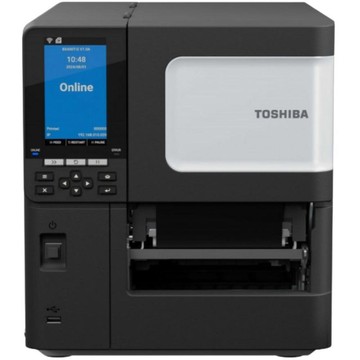
TOSHIBA TABS, THERMAL TRANSFER/DIRECT THERMAL BARCODE PRINTER, (ATO) 4", 305 DPI, FLAT TYPE HEAD, ZPL EMUL
BX420T300
Select model

The Toshiba BX420T Dual-Core is an industrial 4-inch thermal transfer and direct thermal label printer engineered for high-volume, on-demand barcode and identification tasks. Designed for warehouses, logistics, retail and manufacturing environments, this model combines a Dual-Core 1.0 GHz processing platform with robust media handling and flexible connectivity to maintain fast, uninterrupted workflows. Available with 203 dpi or 300 dpi print resolution options, the BX420T supports RFID encoding, peel-off operation and optional cutting or disc-cutter modules, enabling streamlined application of labels and integration into automated lines. Its rugged construction, centered media alignment and comprehensive driver/SDK support simplify deployment and reduce downtime for B2B operations.
Key Features
- High-performance processing: Dual-core 1.0 GHz CPU delivers responsive job handling and supports complex label formats and large print volumes.
- Flexible print modes: Thermal transfer and direct thermal printing with selectable 203 dpi or 300 dpi resolution options for standard or high-detail labels.
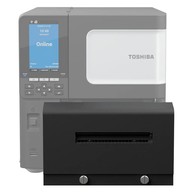
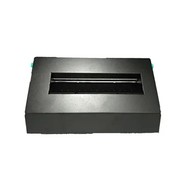
- Integrated media handling: Built-in peel-off (peeler) capability with optional cutter and disc-cutter modules to support automated labeling workflows and easy label application.
- RFID-ready: Optional UHF and HF RFID support enables tag encoding for inventory tracking, asset management and supply-chain applications.
- Enterprise connectivity and SDKs: Gigabit Ethernet, USB host/device, optional Wi‑Fi and serial I/O plus SDKs for iOS, Android, Windows and Java for seamless system integration.
Specifications
- Model family: Toshiba BX420T Dual-Core EcoPrint
- Print method: Thermal Transfer / Direct Thermal
- Print resolution: 203 dpi; optional 300 dpi
- Maximum print speed: 305 mm/s (12 ips)
- Maximum print width: 111 mm (direct-thermal values include 104–111 mm across variants)
- CPU: Dual-Core 1.0 GHz
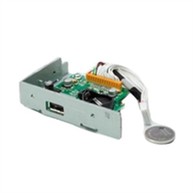
- Memory: 1 GB RAM, 8 GB ROM; expansion via USB drive
- Interfaces: USB 2.0 HS (host/HID), LAN 10/100/1000 Base-T, RS-232 (optional), Expansion I/O; optional WLAN (802.11ac/a/b/g/n/ax)
- User interface: Full color LCD, 2 LEDs, 11 keys
- Operating systems / OS: A-BRID dual OS (Linux-based + RTOS)
- Emulations / Languages: Auto-detection of TPCL, ZPL II, DPL, SBPL, native PDF
- SDKs & software: SDK platforms: iOS, Android, Windows, Java; BarTender UltraLite, NiceLabel; drivers for Windows, Linux, macOS
- Supported media types: Vellum paper and labels, coated and uncoated paper, synthetic film, PET, polyimide; roll and fanfold
- Media width range: 25 to 114 mm (backing paper width range)
- Inner core diameter: 76.2 mm
- Maximum outer media roll diameter: 200 mm
- Ribbon core size / max width: 25 mm core; maximum ribbon width 112 mm; maximum ribbon diameter 90 mm; ribbon length options 600, 800 m
- Print sensors: Reflective and transmissive (black mark, transparency, end-of-media adjustable)
- Printhead type: Flat head
- Standard functions: Auto-calibration, automatic PDF printing, stand-alone printing
- 2D codes supported: Data Matrix, PDF417, MaxiCode, QR Code, Micro QR, Micro PDF417, CP Code, AZTEC, GS1 QR, GS1 Data Matrix
- RFID support: UHF EPC Gen2 and HF ISO 15693 / 14443A (optional)
- Dimensions (W x D x H): 278 x 460 x 310 mm
- Weight: Approximately 16.4 kg (variant dependent)
- Operating temperature / humidity: 5 to 40 °C; 25% to 85% RH (non-condensing)
- Storage temperature / humidity: -40 to 40 °C; 10% to 90% RH (non-condensing)
- Estimated labels per day: More than 5,000
- Optional hardware: Peel-off module, Real time clock, External media guide, RS232, Wireless LAN, Expansion I/O, disc cutter (optional)
 mod-bx420t-toshiba-label-printer-datasheet.pdf BX420T300
mod-bx420t-toshiba-label-printer-user-manual.pdf BX420T300
mod-bx420t-toshiba-label-printer-datasheet.pdf MOD-BX420T
mod-bx420t-toshiba-label-printer-user-manual.pdf MOD-BX420T
mod-bx420t-toshiba-label-printer-datasheet.pdf BX420T300
mod-bx420t-toshiba-label-printer-user-manual.pdf BX420T300
mod-bx420t-toshiba-label-printer-datasheet.pdf MOD-BX420T
mod-bx420t-toshiba-label-printer-user-manual.pdf MOD-BX420T
-
Manufacturer: Not specified
-
Price: Not specified
-
Target Industry: Not specified
-
RFID: No
-
Rugged: Not specified
-
Print Speed: Not specified
-
Color Printing: Not specified
-
POS: No
-
Equipment Format: Not specified
-
Battery Capacity: Not specified
-
DPI: Not specified
-
Case color: Not specified
-
Connection: Not specified
-
Real Time Clock: No
-
Optional Upgrades: Not specified
-
Max Width: Not specified
-
Max Label Length: Not specified
-
Printing Technology: Not specified
-
Battery Features: Not specified
-
Manufacturer: Not specified
-
Price: Not specified
-
Target Industry: Not specified
-
RFID: No
-
Rugged: Not specified
-
Print Speed: Not specified
-
Color Printing: Not specified
-
POS: No
-
Equipment Format: Not specified
-
Battery Capacity: Not specified
-
DPI: Not specified
-
Case color: Not specified
-
Connection: Not specified
-
Real Time Clock: No
-
Optional Upgrades: Not specified
-
Max Width: Not specified
-
Max Label Length: Not specified
-
Printing Technology: Not specified
-
Battery Features: Not specified
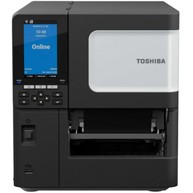
TOSHIBA TABS, THERMAL TRANSFER/DIRECT THERMAL BARCODE PRINTER, (ATO) 4", 305 DPI, FLAT TYPE HEAD, ZPL EMUL
BX420T300
TOSHIBA TABS, THERMAL TRANSFER/DIRECT THERMAL BARCODE PRINTER, (ATO) 4", 203 DPI, FLAT TYPE HEAD, ZPL EMUL
BX420T200