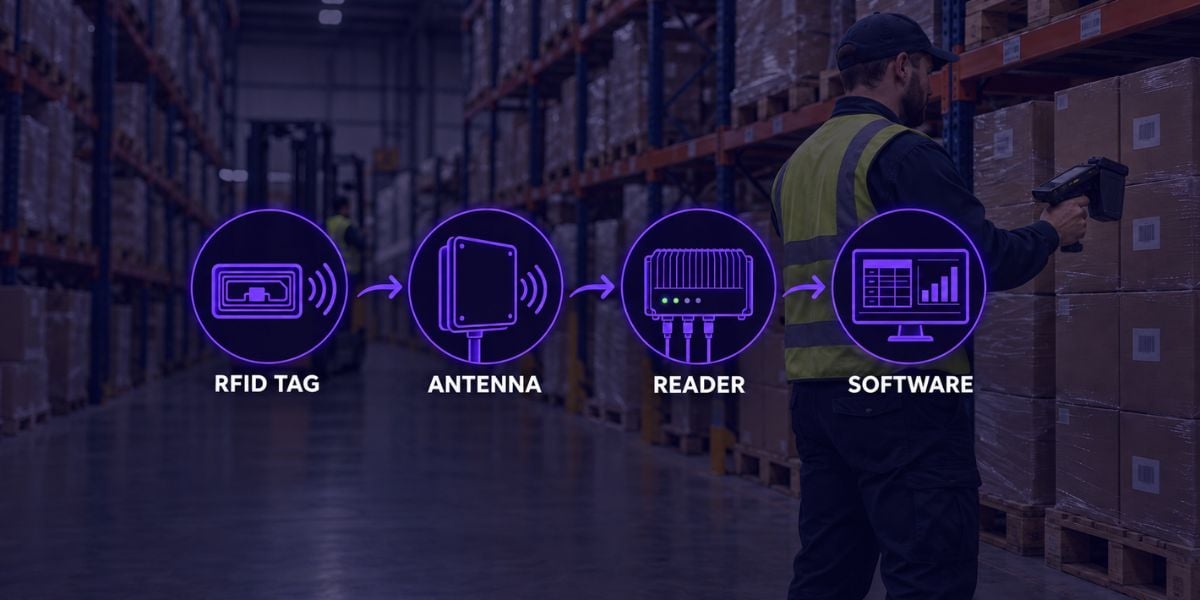
How Do RFID Tags Work, and Which Type Do You Need?
How do RFID tags work? See how the chip, antenna and power source work together, then match a tag to your surface and read range.

My Cart
—
Incl. VAT

Author: Mike Vaughn
Store operations have evolved rapidly in recent years. Principal objectives have changed from stocking the sales floor and managing checkout to creating the physical touchpoint of omnichannel operations. Managing today's multifaceted retail operations that blend digital and physical commerce requires a new strategy and seamless coordination. However, to succeed, retailers also need targeted technology implementations to manage complexity.
Retail teams responsible for managing new revenue streams and more points of engagement than in the past must juggle competing priorities for labor, space, and workflows. They're often limited by disconnected systems, poor inventory visibility, and manual handoffs that can create delays and errors. Multistore enterprises must also ensure that brand experiences are consistent across all locations. The solution is to eliminate silos and create a unified technology ecosystem that "blends" the elements of an omnichannel operation into cohesive store operations.
Retailers that operated traditional, brick-and-mortar businesses now have stores that serve as "micro-fulfillment centers." Staff in those stores need tools that distribution centers use, including mobile devices for accurate picking and packing orders, inventory management solutions for real-time visibility, and the ability to ship from the store. Statista reports that global ecommerce will reach $3.88 trillion this year, and the number of ecommerce shoppers will reach 4.1 billion (58.1% penetration) by 2030. Retailers need to optimize ecommerce fulfillment and effectively integrate it into store operations.
Customers ordering online may choose to pick up their merchandise in the store or curbside to save time and eliminate shipping costs. CapitalOne Shopping reports that buy online, pickup in store (BOPIS) now accounts for 11% of all U.S. ecommerce sales, and it will grow to 11.5% by 2030. So, in addition to accurately picking and packing orders, stores must deliver the best service and customer experience when customers arrive to collect them. Sales associates need mobile access to order details so they can ensure customers receive the correct, complete orders. Stores will also benefit from sales associates with mobile point of sale (mPOS) devices that they can use to make incremental sales when BOPIS customers arrive at the store.
Whether customers make in-store purchases or order online, they want the ability to return in-store. It avoids having to ship returned items, making the experience more convenient and less expensive for customers. To manage returns of online orders, the store team needs visibility into customer accounts and solid policies that protect the business from fraud, like returns for credit and requiring original receipts. The store also needs a coordinated process for returning products to store shelves or storage for an accurate account of inventory on hand.
Part of the appeal of shopping in a brick-and-mortar store is access to face-to-face service. Customers expect sales associates to have the answers they need to make purchasing decisions or to resolve issues with past purchases. To ensure customer satisfaction, sales associates need quick access to all relevant data, from customer history and product information to inventory availability and promotion details.
Competitive retailers know consumers ready to buy items have more choices than ever before. Retailers with physical store operations can build a competitive edge by creating immersive shopping experiences that appeal to their markets. Stores may deploy augmented reality/virtual reality (AR/VR) technology to create smart fitting rooms that give shoppers the ability to "try on" apparel that isn't in stock. Retail operations can include systems that allow shoppers to visualize what furniture or renovations will look like in their homes or to virtually try sporting equipment. Stores may also add technology meant to entertain or gamify shopping. However, implementing these systems adds more complexity to retail operations.
While retail expanded to offer new points of engagement and meet new customer expectations, retailers faced additional challenges. First, many store operations are faced with having to do more with fewer people. The retail labor shortage continues, with the U.S. Bureau of Labor Statistics reporting more than 700K job openings in retail in Feb 2026, up 25K from January and up from 519K from Feb 2025.
Controlling costs is also crucial. Retailers need a way to keep operating costs low so they can charge prices that their markets will accept and that are competitive. However, keeping a lid on costs cannot sacrifice customer experience. PwC reports that about one-quarter of U.S. consumers will stop purchasing from a brand after one negative experience, and 59% will throw their loyalty to other brands after several bad experiences.
Retail technology is the key to cleaner workflows, streamlining operations, and better execution. Key elements of a strategy that successfully optimizes retail operations include:
One of the most practical ways to reduce the complexity of modern store operations is to work with an experienced partner. Stores can augment their in-house resources with a partner that provides lifecycle services, including repairs and reconfigurations, and gives IT visibility into the status of devices. A partner can also take the responsibility of managing a spares pool, running a help desk to field calls from users across the enterprise, and managing and monitoring the network for maximum uptime and strong security.
A partner with retail technology expertise can also help design, deploy, and support systems to optimize processes and workflows in the front and back of house.
Contact us to learn why Levata is the partner retailers need to simplify store operations.
About the Author:
Mike Vaughn is a digital transformation leader with more than a decade of global experience helping retailers modernize operations through strategic technology adoption. As a Senior Director of Enterprise Sales at Levata, he works closely with retail organizations to design and implement solutions that enhance the shopper experience while improving operational visibility across stores and supply chains. Vaughn partners with customers to deploy mobility, data capture, and automation technologies that streamline workflows, improve inventory accuracy, and support seamless omnichannel retail strategies—from the sales floor to fulfillment. His customer-first approach focuses on helping retailers use connected technology and intelligent insights to deliver faster, more convenient, and more personalized shopping experiences.
How do RFID tags work? See how the chip, antenna and power source work together, then match a tag to your surface and read range.
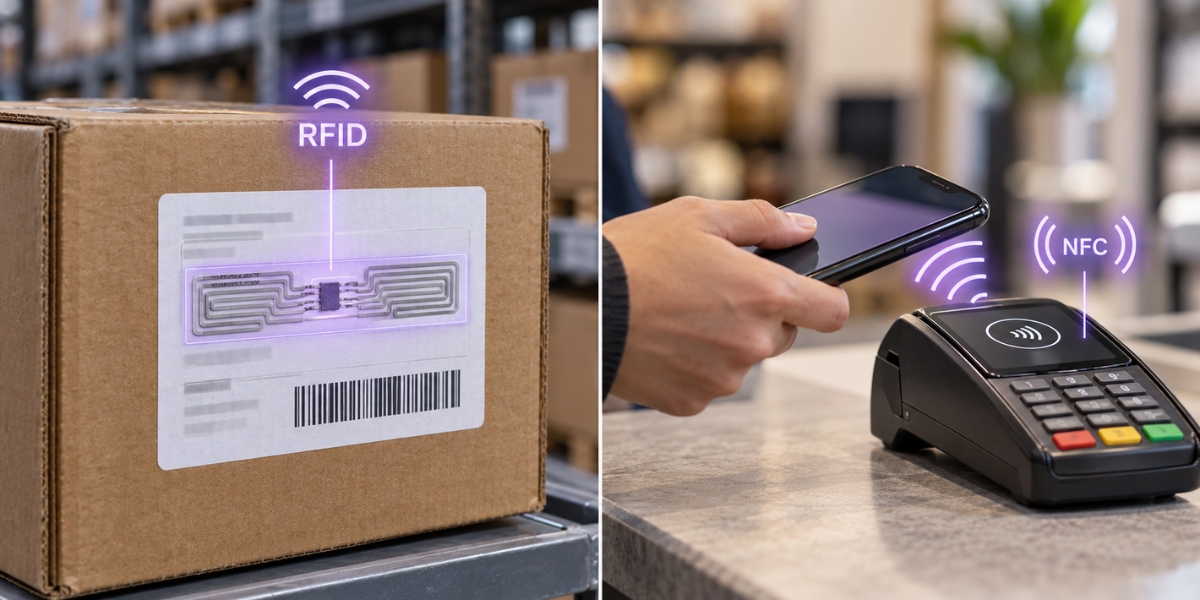
See how RFID and NFC differ on range, standards, and use, plus which one fits inventory tracking versus payments and access.
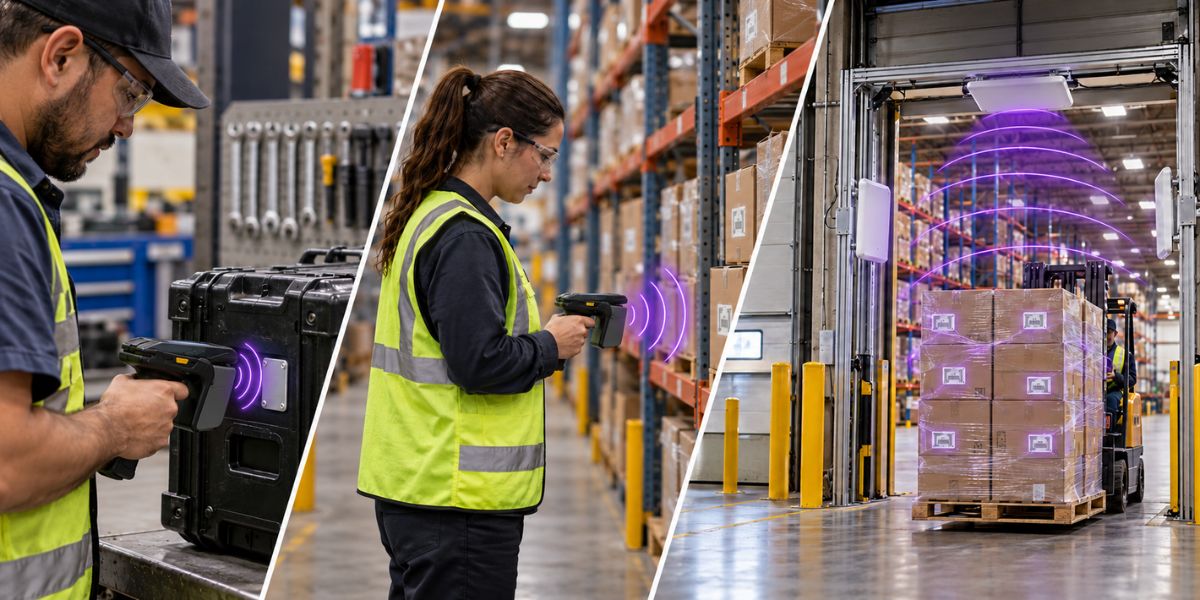
Compare LF, HF, and UHF RFID on range, standards, regulation, and best use, with a reference chart built to save and cite.
Welcome, ID Card Group customers!
On September 24th, IDCardGroup.com transitioned to Levata.com. You still have access to the ID solutions you rely on, along with a broader selection of data capture and technology solutions.
What you can expect:
Questions? Call 1-833-353-8282.
Thank you for choosing Levata.
Welcome, IT Planet customers!
On September 24th, ITPlanet.com transitioned to Levata.com. You still have access to the products you rely on, along with a broader selection of data capture and technology solutions.
What you can expect:
Questions? Call 1-833-353-8282.
Thank you for choosing Levata.
Welcome, Barcode Planet customers!
On September 24th, BarcodePlanet.com transitioned to Levata.com. You still have access to the products you rely on, along with a broader selection of data capture and technology solutions.
What you can expect:
Questions? Call 1-833-353-8282.
Thank you for choosing Levata.