
What Is RFID and How Does It Work? A Plain English Guide
What Is RFID and How Does It Work? A Plain English Guide

My Cart
—
Incl. VAT
Author: Jennifer Gene
To achieve the primary goals of restoring, improving, and maintaining physical and mental health, hospitals, clinics, and behavioral health services need policies and procedures that allow them to operate accurately and compliantly. It is essential that healthcare providers confirm patient identity, for example, via Medicare verification with ID.me, CLEAR, or Login.gov. Verifying identity ensures healthcare providers are treating the right patient before administering medication, performing procedures, or providing therapies.
Access control is also foundational, ensuring only authorized people in healthcare organizations have access to the systems that control protected health information (PHI). Patient data is key to effective care; however, protecting it is also mandated by the Health Insurance Portability and Accountability Act (HIPAA), so patients have control over their privacy and can pursue care without fear of exposure.
Verifying patient identity begins at registration. Receptionists or registrars collect patients’ names and dates of birth, request a government-issued ID with a photo, and copy insurance or healthcare coverage information. However, once the registration process is complete and patients begin to move through the facility, clinicians need to be able to confirm who patients are at each step of care, whether the patient meets with a physician, undergoes a procedure, receives an injection, or even receives a meal that conforms to their dietary restrictions.
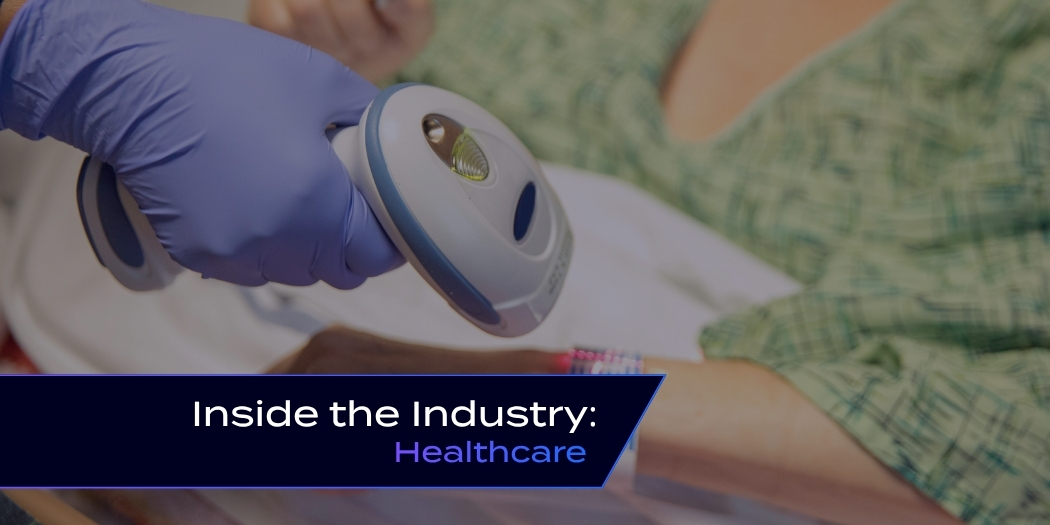
A people ID system leveraging barcoded wristbands is a common way for healthcare providers to verify patient identity. Patients receive the wristbands at registration, and clinicians scan them when administering care. Digitizing the process increases accuracy, but it also creates an auditable record for compliance and accountability.
Biometrics are also emerging as a technology for identity verification. A fingerprint scan can speed up data collection at check-in or registration and provide an extra layer of protection against insurance fraud. Biometric identity verification can also give hospitals a way to identify patients in emergencies.
Regardless of the technology, healthcare organizations should select systems that support digital trust and a frictionless, convenient onboarding process that does not interfere with patient access.
Additionally, when a healthcare provider implements a patient identity verification system, administrators must protect patient privacy and PHI by ensuring only authorized staff can access the system. Strong access control methods and comprehensive staff training will help protect these systems, patient identity, and critical healthcare data.
Organizations leverage several healthcare technologies to create a patient identity solution. Components of a comprehensive solution include:
Granting access to the patient matching system, in addition to other protected or restricted systems and areas throughout the healthcare facility, requires a robust access control solution. Secured printers are necessary to print clinician and staff credentials, both with text, barcode, and, often, radio-frequency identification (RFID) technology to communicate with automated security at doors and on IT hardware.
Access control system software should enable the healthcare facility to grant access by role, so staff members have access only to areas, functions, and data necessary to do their jobs. Multi-factor authentication (MFA), which requires a credential scan plus at least one other way to verify identity, helps to prevent someone with stolen credentials from accessing systems. A single sign-on (SSO) system can simplify clinician and staff workflows by enabling secure access to multiple systems with one authentication process. The healthcare organization must also have security solutions continuously monitoring all systems to quickly spot and stop any unusual activity.
To ensure reliable performance, the healthcare facility must have a network that delivers continuous connectivity supporting enterprise mobility at scale. Furthermore, all systems must be interoperable and enable real-time authentication to avoid errors and delays.
The primary benefits of people ID and access solutions are clear: They ensure healthcare organizations are providing care to the right people, accurately delivering that care, and protecting PHI. However, healthcare providers also benefit from patient identity and access control solutions in additional ways.
These solutions assure clinicians that they are correctly and accurately administering medication or therapies and performing procedures. With a barcoded wristband, clinicians can verify identity even if the patient is unconscious or unable to communicate.
The FBI reports that patients may intentionally deceive healthcare providers to receive care illegally. Verifying identity reduces this risk.
Unfortunately, fraud risks are not only related to patients. Healthcare system employees may also put data and operations at risk. Strong access control with MFA that tracks who has used systems provides an audit trail to hold employees accountable.
MFA adds a layer of protection to access control and strong, updated security solutions, reducing the risk that hackers or ransomware groups will gain access and put PHI at risk.
An identity verification and access control solution should do more than meet its primary objective. It should enable patient and staff identity authentication quickly, with minimal friction. The solution’s design should ensure accuracy while saving time and not interfering with positive patient experiences.
Implementing a solution that verifies that the right patients are receiving the right care while safeguarding their PHI is a complex challenge. All systems and devices must work together to ensure accurate information is available instantly and on demand through the care journey.
The healthcare provider’s focus must stay on patients, so working with an experienced healthcare solutions provider partner is the best strategy. Your partner can ensure that mobile devices deliver maximum performance through lifecycle services, including configuring, imaging, monitoring, repairs, and advanced replacement from a spares pool. Your healthcare technology provider partner can also support your IT team with help desk services to keep up with requests across your organization and with network management and monitoring for maximum security and uptime.
Are you planning or upgrading a system that authenticates identity, controls access, and works flawlessly to build digital trust? Levata is ready to partner with you to make it happen. Contact us to learn more.
About the Author:
Jennifer Gene is the Vice President, Healthcare and Public Sales at Levata. With over 20 years of deep experience leading high-performing teams and advising healthcare organizations, Jennifer brings a strategic, outcomes-driven approach to healthcare technology transformation. Throughout her career, Jennifer has partnered with hospitals, health systems, and care networks to navigate the unique operational, regulatory, and clinical challenges that define the healthcare industry. Specializing in mobility, automation, and real-time visibility solutions, Jennifer helps healthcare leaders implement technology that empowers frontline staff, streamlines workflows, and increases productivity—without disrupting patient care.
What Is RFID and How Does It Work? A Plain English Guide

Transitioning to a mobile-first factory builds a more productive workforce, increases accuracy and product quality, reduces costs, and increases customer satisfaction.

Modern healthcare infrastructure, including edge computing, high-density wireless networking, and IoMT systems, supports enhanced operations and patient care.