3PL Provider
Driving 3PL Efficiency Through WaaS and DaaS
Launching new customer warehouses requires fast, repeatable deployment of fully connected devices — without the burden of large upfront costs or added IT staffing.

My Cart
—
Incl. VAT
A leading global electronics manufacturer has built a reputation of customer obsessed thinking, elegant design, and consistent excellence across every product line.
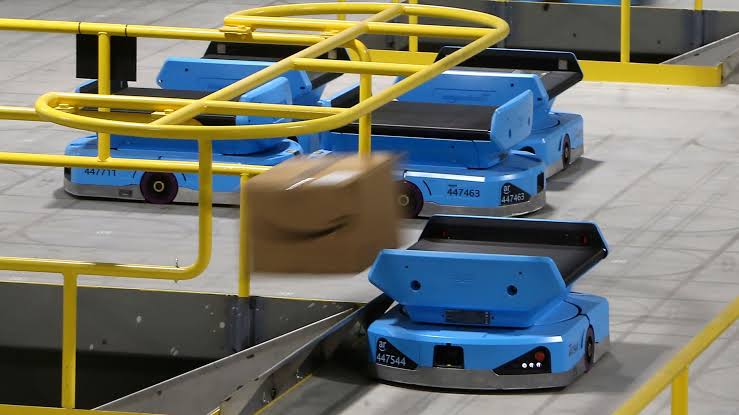
The production facility consisted of ten pickup and dropoff stations in a large assembly zone. Each technician was making thousands of trips and lifting totes manually. The safety risks, labor costs, margins of error, and environmental impacts were worth reexamination. In addition to its broader employee safety goals, the electronics manufacturer wished to improve worker efficiency. Rather than picking up totes and bringing these to the conveyor belt, skilled workers could focus on other ways of adding value. “Sustainability, employee safety, and efficiency were desired outcomes. Our team committed to eliminating redundancy and reliance on human technicians anywhere possible,” the VP of Process Improvement shared. “Even with limitless resources and ingenuity, there is a ceiling to how much you can refine and optimize existing assembly processes. Integrated automation was the logical next step.”
The company determined that a proper automation pilot was necessary to achieve improved safety and production output with minimal environmental impact. While the potential for automation was obvious, the actual integration and implementation of such technology raised more questions than answers. After hearing of successful automation pilots in competitor facilities, the VP spoke to their partners for further guidance. Thanks to a proven track record with autonomous mobile robotics (AMR), Levata’s dedicated team of Pre-Sales Engineers, Solution Architects and Account Managers was recommended to oversee the AMR pilot program. Levata’s Pre-Sales Engineer began with an onsite visit for a better understanding of the operation, as well as to collect key data points for improvement. Goals were set based on the number of pounds transported and the difference in delivery time of robots versus humans. Other key metrics included how much product was being moved, which pallet applications were in use, how well each conveyor system performed, and how many pallets per hour were being shipped out. With this data, the Solution Architect at Levata created a facility map, built out workflows, and modeled different scenarios that would not only ensure a safer workplace and improved efficiency, but also operate seamlessly with existing WMS and ERP software. Levata recommended a lineside delivery AMR to supplement its existing workforce. The AMR was the ideal automation vessel. With seamless plug-and-play installation, it addressed the safety, sustainability, and workflow challenges, fit the totes used by the manufacturer, and served as a perfect support tool for the entire production line. Most of all, the mobile robot provided interoperability between existing software, pickup/dropoff stations, technicians, conveyor systems, construction machinery, and palletizers.
Within six months, the solution had already met goals set on the basis of worker efficiency. The AMR pilot led by Levata also demonstrated scalability in other locations due to a simple integration process and quick setup. The electronics manufacturer plans to implement automation in similar production facilities worldwide.
Contact our team to discuss how we can help transform your business.
3PL Provider
Launching new customer warehouses requires fast, repeatable deployment of fully connected devices — without the burden of large upfront costs or added IT staffing.
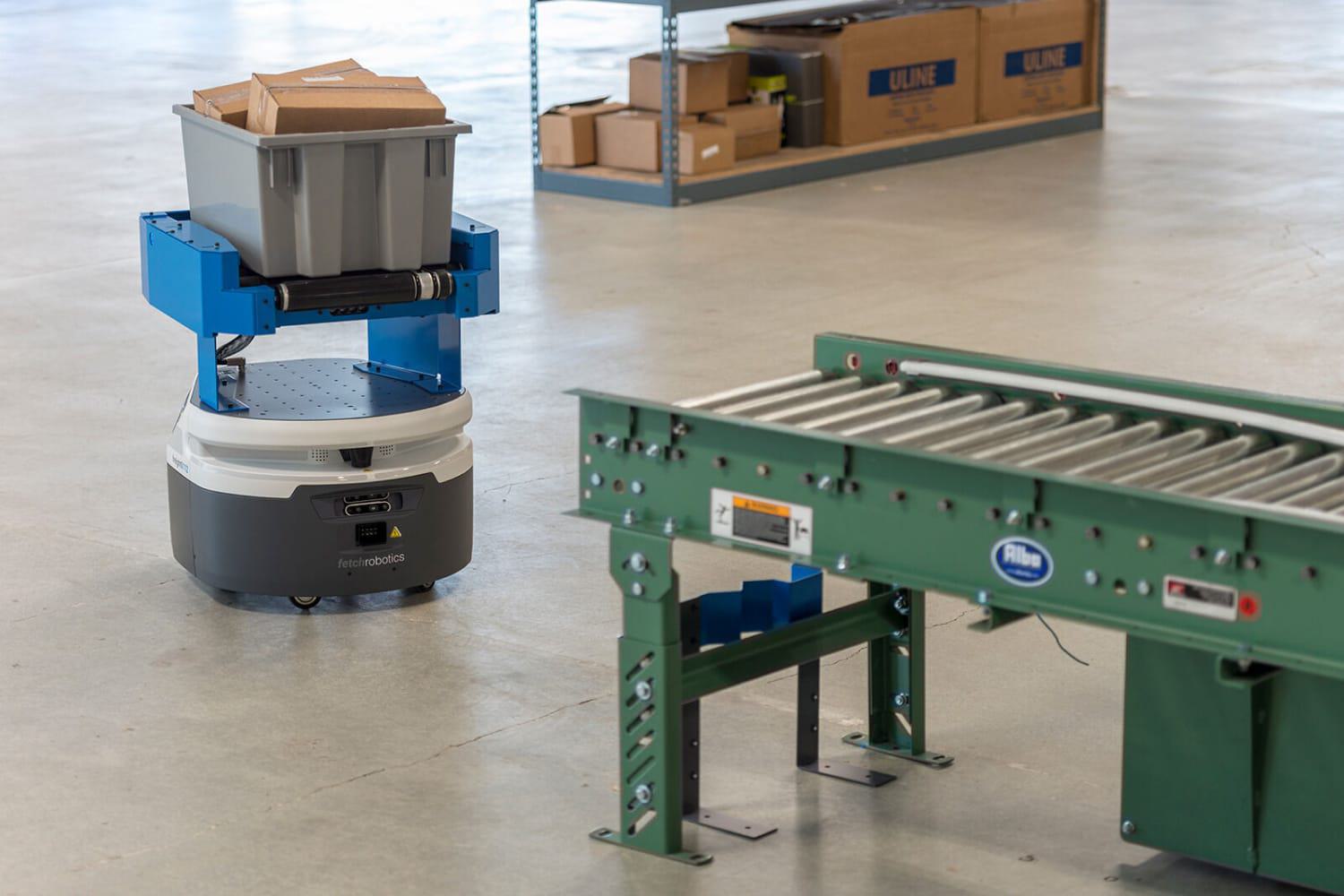
With dozens of snack brands, over 50,000 employees, and warehouse expansions across the United States, a worldwide leader in the food and beverage industry has long understood the importance of integrated automation.

Monat Global Corp.
Monat Global Corp., a leading direct sales haircare, skincare, and wellness company, improved warehouse operations by replacing manual, paper-based processes with efficient barcode scanning and mobile device solutions, tripling order throughput from 80 to 260 lines per hour.