Seleccionar modelo

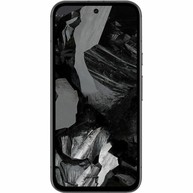
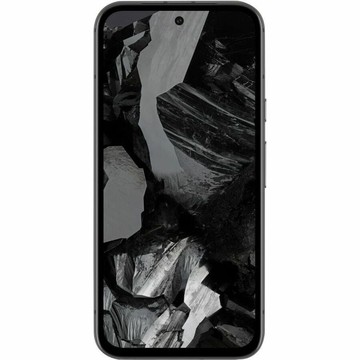
The Google Pixel 8a is a 5G Android handheld computer built around the Google Tensor G3 chipset, pairing a nona-core processor architecture with 8 GB of RAM and 128 GB of built-in storage to handle demanding mobile workloads. Running Android 14, it combines cellular connectivity up to 5G, a dual rear camera system, and an integrated sensor suite in a bar-form device measuring 6" x 2.9" x 0.4" and weighing 6.60 oz.
Key Features:
- The Google Tensor G3 chipset, built on a 4 nm process, drives a nona-core processor configuration spanning a Cortex X3 core at 3 GHz, four Cortex A715 cores at 2.45 GHz, and four Cortex A510 cores at 2.15 GHz, distributing workloads efficiently across performance and efficiency clusters.
- 8 GB of RAM combined with 128 GB of built-in storage provides headroom for multitasking across multiple apps while retaining substantial local capacity for data, media, and enterprise applications.
- The 6.1" OLED display resolves at 1080 x 2400 with a 120 Hz refresh rate and a typical contrast ratio of 1000000:1, delivering sharp, fluid visuals in a screen-to-body ratio of 81.6%.
- A dual rear camera — 64 Megapixel main sensor and 13 Megapixel secondary — with 4K video recording, paired with a 13 Megapixel front camera also capable of 4K, covers a wide range of imaging tasks from documentation to video calling.
- 5G cellular generation with data connectivity technologies including LTE, HSPA+, HSDPA, HSPA, UMTS, EDGE, and GPRS ensures broad network compatibility across GSM and HSDPA bands.
- Support for two SIMs — one Nano SIM and one eSIM — on a SIM-free contract type gives operators the flexibility to assign carrier profiles without hardware changes.
- An IP67 ingress protection rating means the device is rated against dust ingress and immersion, adding resilience for use in varied environments.
- The 4492 mAh battery supports both fast charging and wireless charging, with a maximum charging power of 7.50 W, reducing downtime between shifts.
Chipset and Processor Architecture
At the heart of the Pixel 8a sits Google's own Tensor G3 system-on-chip, manufactured on a 4 nm process. The nona-core layout is divided into three clusters: a single Cortex X3 core running at 3 GHz handles peak single-threaded demands, four ARM Cortex A715 cores at 2.45 GHz take on sustained parallel workloads, and four ARM Cortex A510 cores at 2.15 GHz manage background and low-intensity tasks to preserve battery. This tiered design means compute-heavy operations get the headroom they need without forcing the whole chip to run at its highest state continuously.
Memory and Storage Capacity
With 8 GB of standard RAM and 128 GB of built-in storage, the device accommodates simultaneous apps and retains a substantial local data footprint. There is no memory card slot, so the 128 GB figure represents the total available on-device capacity — a relevant consideration when planning data retention or media storage for extended deployments away from network access.
Display Brings Clarity to Every Task
The 6.1" OLED panel operates at 1080 x 2400 resolution in a 20:9 aspect ratio, which suits portrait-oriented content and single-handed use. A 120 Hz standard refresh rate keeps on-screen motion smooth when scrolling through data or navigating maps. The 81.6% screen-to-body ratio minimises the bezel footprint, and a typical contrast ratio of 1000000:1 ensures that both bright and dark content renders with accurate depth.
Camera System Supports Detailed Imaging
The dual rear camera pairs a primary 64 Megapixel sensor with a 13 Megapixel secondary lens, and both rear and front cameras support 4K video recording at up to 60 fps. The 13 Megapixel front camera extends 4K capture to video calling and self-documentation. Google's on-device AI photography features — including AI Photography capabilities built into the Tensor G3 — assist with image processing, and tools such as Best Take, Photo Unblur, Magic Editor, and Audio Magic Eraser are available within the software stack for post-capture editing.
Operating System and AI Integration
The device ships with Android 14 and incorporates Google's Gemini AI assistant, enabling on-device and cloud-backed assistance for tasks such as drafting, information lookup, and summarisation from Gmail and Google Docs. Circle to Search allows users to invoke a search from within any app by drawing around text or an image. Live Translate can interpret text through the camera lens in real time. The AI Assistant classification in the technical data confirms these capabilities are part of the shipped software, not add-ons.
Cellular and Wireless Connectivity
The Pixel 8a connects over 5G as its headline cellular generation, and the supported data technologies span HSPA+, HSDPA, HSPA, LTE, UMTS, EDGE, and GPRS, covering a wide range of network conditions. GSM band support across 850, 900, 1800, and 1900 MHz, together with HSDPA bands at 800, 850, 900, 1700, 1900, and 2100 MHz, broadens compatibility across carrier infrastructures. Wireless LAN, NFC, and a GPS receiver round out the wireless stack, and the integrated GPS is also listed among the device's hardware sensors.
Dual SIM Flexibility
The device supports two simultaneous SIM profiles — one physical Nano SIM and one eSIM — and is supplied SIM-free, meaning it arrives without a carrier lock. The eSIM capability allows a carrier profile to be provisioned remotely, which can simplify fleet configuration when deploying across multiple operators or regions.
Sensor Suite Enables Context-Aware Operation
Nine discrete sensors are listed in the technical data: a Fingerprint Sensor, Accelerometer, Gyro Sensor, Proximity Sensor, Digital Compass, Barometer, Ambient Light Sensor, Magnetometer, and GPS. Together they support biometric authentication, motion-aware applications, orientation tracking, atmospheric sensing, and precise location — functions that depend on physical hardware rather than software configuration.
Calling Features Manage Communication Efficiently
Call Screen helps filter unwanted incoming calls before they reach the user. Clear Calling is designed to reduce the impact of background noise on call audio. Hold for Me monitors hold queues and notifies the user when a live agent becomes available. Wait Times surfaces estimated hold durations before a call is placed. Smart Replies allows a response to be sent to an incoming call without answering it.
Safety and Security Features
The device includes crash detection, which can recognise a severe vehicle collision and contact emergency services automatically while sharing the device's location. Crisis alerts deliver proactive hazard notifications. VPN by Google One is built in, and support for passkeys provides a credential approach that does not rely on reusable passwords. These features operate at the platform level and do not require third-party applications.
Battery and Charging
The 4492 mAh battery supports both wired fast charging and wireless charging. Maximum charging power is rated at 7.50 W. Both charging modes are hardware-confirmed in the technical data, meaning neither requires an optional accessory to activate — though the in-box cable is a 1 m USB-C to USB-C at USB 2.0 specification.
Physical Build and Environmental Rating
At 6" x 2.9" x 0.4" and 6.60 oz, the bar-form device is sized for single-handed use. An IP67 ingress protection rating certifies it against total dust ingress and temporary immersion in water, providing a degree of environmental resilience beyond that of unrated consumer handsets. The device is available in Obsidian finish.
In the Box
Each unit ships with a 1 m USB-C to USB-C cable at USB 2.0 specification, a Quick Switch Adapter, and a SIM Tool. No charging brick is included, consistent with current packaging practice for this product line.
Características principales
-
Almacenamiento: 128 GB
-
Fabricante: No especificado
-
Precio: No especificado
-
Tipo de Almacenamiento: No especificado
-
Industria Objetivo: No especificado
-
RFID: No
-
Sistema: No especificado
-
Robusto: No especificado
-
Formato de Equipos: No especificado
-
Captura de Datos: No
-
RAM/FLASH: No especificado
-
Capacidad de la Batería: No especificado
-
Tamaño de pantalla: No especificado
-
GPS: No
-
Rango: No especificado
-
Conexión: No especificado
-
SSD: No especificado
-
Clavo: No especificado
-
ATEX: No especificado
-
Mejoras Opcionales: No especificado
-
CPU: No especificado
-
Teclado: No especificado
-
Almacenamiento: 128 GB
-
Cámara: No especificado
-
Batería incluida: No
-
Características de la Batería: No especificado