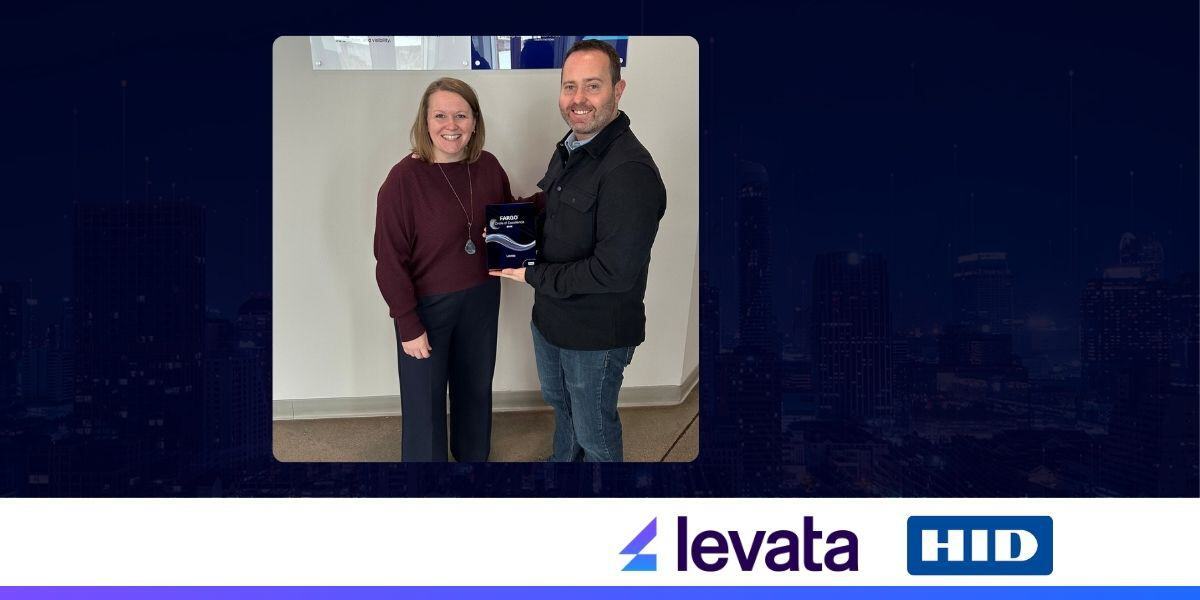
Levata Honored with HID Circle of Excellence Award
Levata received the HID Circle of Excellence Award, recognizing its strong year-over-year growth and commitment to advancing secure identity and access control solutions.
Free Delivery on orders over £250
Free Delivery on orders over £250

My Cart
—
Incl. VAT
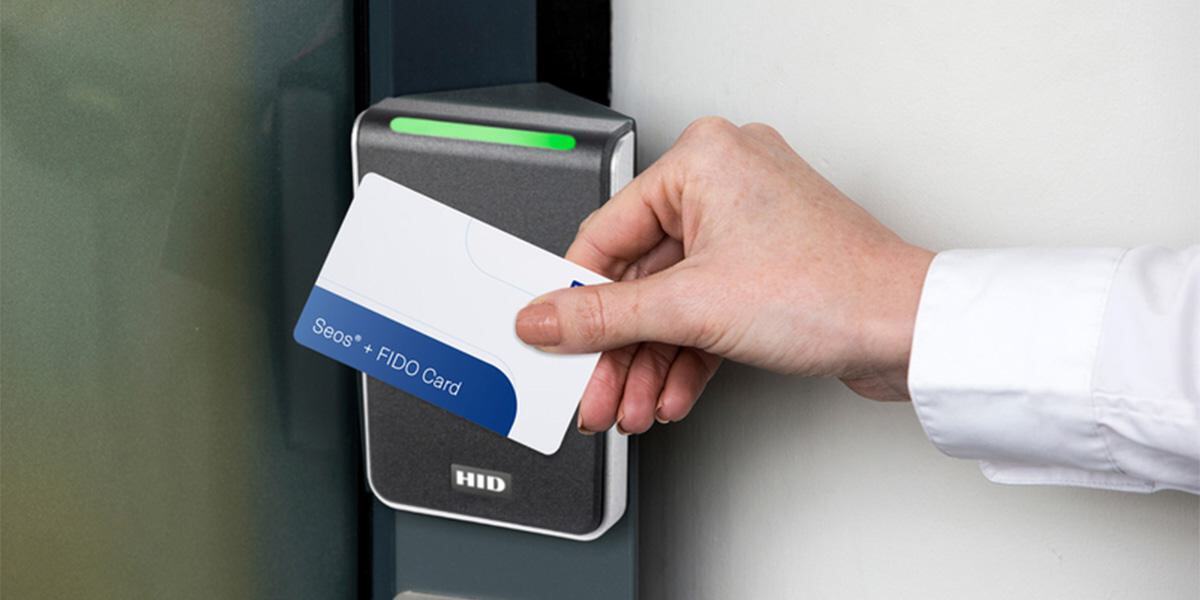
Discover how secure identity has evolved with HID Seos credentials, delivering advanced encryption, flexible form factors, and future-ready authentication for modern access control.
Security used to be about doors, locks, and badges. Today, it's about identity trust — verifying who someone is, what they're allowed to access, and how that access is authenticated across dozens of systems simultaneously.
As enterprises, hospitals, universities, and government agencies expand the number of systems requiring authentication — from building entry and network login to secure printing, parking, time tracking, and digital services — the credential itself has become one of the most critical security points.
Many enterprises continue to rely on legacy card technologies that were never designed to withstand today's sophisticated security threats or to support modern, interconnected environments.
Modern secure identity must deliver:
Access control is evolving from "card technology" to identity platforms. Legacy credentials simply weren't designed for today's level of threat landscape or system complexity.
At the core of modern credential strategy is the concept of a unique digital identity — one that is cryptographically bound to a credential or device and verified continuously, not just once.
For businesses, this means stronger protection of assets, facilities, and data. For individuals, it means trusted, seamless access to the tools and environments they need to work effectively.
HID® Seos® was created specifically to address significant security risk increases and to support extended applications, allowing organizations to consolidate multiple functions into a single, trusted credential.
HID Seos credentials represent a major step forward in credential security, flexibility, and scalability. Key features include:
Layered Cryptographic Security
Seos uses modern encryption, mutual authentication, and secure messaging to ensure both the credential and reader validate each other before data is exchanged. This dramatically reduces risk from cloning or replay attacks.
Secure Identity Object (SIO) Protection
Seos uses Secure Identity Object technology to store identity data in encrypted, signed, and validated formats. Each identity is uniquely assigned and cryptographically bound to its credential.
Independent Third-Party Validation
Seos achieved a SEAL-5 rating — the highest level — in independent security testing, providing objective validation of its strength compared to legacy credential technologies.
Open Standards Security Model
Seos leverages global security standards used in electronic passports and payment cards, helping ensure long-term viability and continuous security evolution.
Seos Core: Flexible, Secure Credential Storage
Seos credentials are built on the Seos Core, a secure vault that is independent of form factor, hardware, and communication protocol. Digital credentials are stored in Application Dedicated Files (ADFs) that can be created or destroyed dynamically, allowing credentials to evolve over time without requiring reissuance.
Multi-Application and Mobile-Ready by Design
A single Seos credential can securely support applications such as:
One of the most valuable aspects of Seos technology is its independence from physical hardware. Because it is software-based, Seos credentials can be delivered across multiple form factors without changing the underlying security model:
Because Seos is not tied to a specific chip or communication protocol, organizations can mix and match credential types to match user needs — while maintaining consistent security.
Decades-old credential technologies are no longer sufficient to protect modern organizations or support future growth. With Seos, organizations are not just upgrading a card—they are investing in a credential platform designed to secure identities today and adapt seamlessly for whatever comes next. HID Seos represents this new generation of credential strategy — one that provides best-in-class security, unmatched flexibility, and a foundation for multi-application use across industries including enterprise, education, government, and hospitality.
Contact Levata today to learn more about modern People ID and Secure Access Control solutions.
Levata received the HID Circle of Excellence Award, recognizing its strong year-over-year growth and commitment to advancing secure identity and access control solutions.

AI workloads are driving manufacturers to reallocate memory chip capacity, creating supply constraints on enterprise devices. Learn how to protect your organization's refresh schedules and lock in pricing ahead of worsening shortages.

This how-to guide reviews traditional credential methods like proximity cards and smart cards that still serve many organizations well, and shares emerging technologies such as mobile access and eco-friendly credentials that are entering the scene.