
Honeywell
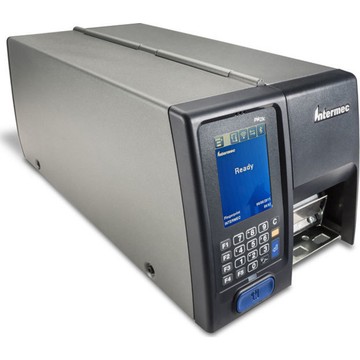
FT, ROW, Ethernet, Long Door, No I/O 1, Rew+LTS, Hanger + RTC, TT300DPI, EU Power Cord (PM23c, Icon, DT, 203dpi, rewinder, US Cord)
SKU:
PM23CA1100021302
Fitted with an internal rewinder and a real-time clock, the Intermec PM23CA1100021302 handles both direct thermal and thermal transfer label printing at up to 300 dpi and 11.81 in/s across a 2.20-inch print width. It accepts labels up to 2.70 inches wide on rolls to 8.38 inches in diameter with a 3-inch label core, and supports linered, linerless, tag, ticket, and fanfold media, detected by transmissive, reflective, and label taken sensors. Memory stands at 128 MB SDRAM with 128 MB flash, and connectivity covers serial, USB, and Fast Ethernet. IPL, ZPL, DPL, and XML emulation are included alongside a broad symbology set spanning UPC/EAN, ISBT-128, HIBCC, LOGMARS, and POSTNET. Input voltage accepts 110 V AC or 220 V AC with a 300 W maximum and 9 W standby draw. At 20.94 lb, the unit carries CE (EN55022 Class A), FCC Class A, UL, cUL, CCC, and D Mark certifications.
Select model
Prices could not be updated.
Add a protection plan
for:
£16.67
View details
Same-day shipping
for orders placed before 2:30 p.m.
Learn more
Secure payment with

Description
The Intermec PM23c is a mid-range industrial direct thermal and thermal transfer label printer from Honeywell, designed for IT managers and operations teams in transportation, manufacturing, retail, distribution center, and warehouse environments. Its compact footprint and two-inch print width make it well suited for space-constrained workstations, while print speeds of up to 100–300 mm/s at 203/300 dpi support high-volume labeling demands. Standard Fast Ethernet and USB connectivity enable straightforward network integration, and the printer is also available with optional RFID capability for smart-label applications. Support for IPL, ZPL, DPL, and XML command languages simplifies drop-in deployment across mixed printer environments, and 128 MB of flash memory plus 128 MB SDRAM provide a stable platform for consistent, accurate barcode output.
Technical Specifications
Documents

FAQs
What print speeds and resolutions does the Honeywell PM23 Label Printer support?
At 203 dpi and 300 dpi, the PM23 prints at 100–300 mm/s (4–12 ips), and at 406 dpi it prints at 100–250 mm/s (4–10 ips). Resolution is 8 dots/mm at 203 dpi, 11.8 dots/mm at 300 dpi, and 16 dots/mm at 406 dpi.
What wired and wireless connectivity options come standard on the Honeywell PM23 Label Printer?
Standard wired interfaces include Ethernet 10/100 Mbps, USB 2.0, and RS-232; optional connections include Parallel IEEE 1284 and Dual USB Host. Wireless options include IEEE 802.11 a/b/g/n with Bluetooth, Wi-Fi Certified, and CCX (Cisco) version 4 Certified, with support for WPA2 and IPv4/IPv6.
What media widths and types does the Honeywell PM23 Label Printer accept?
The PM23 accepts media widths from 19 mm to 68 mm (0.75 in to 2.7 in) and handles labels, tags, linerless and linered media in roll-fed or fanfold configurations, with gap, notch, black mark, and continuous sensing. Label rolls up to 213 mm (8.38 in) in diameter are supported, with a core size of 38–76 mm (1.5–3 in).
Which industries and environments is the Honeywell PM23 Label Printer designed for?
The PM23 is designed for distribution centers, warehouses, manufacturing, transportation, and retail environments. Its metal construction and operating temperature range of +5°C to +40°C make it suited for demanding industrial conditions.
Does the Honeywell PM23 Label Printer support RFID printing?
Yes, an RFID option is available, supporting the 18000-6C / EPC Class 1 Generation 2 standard at 865–928 MHz, configured to comply with local UHF RFID regulations including FCC and ETSI. Regional availability should be confirmed with a local representative.
What printer command languages and device management tools does the Honeywell PM23 Label Printer support?
The PM23 supports IPL, DP, ZSim2 (ZPL-II), and DSim (DPL) command languages, as well as XML for SAP AII and Oracle WMS integration. Device management is handled through PrintSet, Honeywell SmartSystems, Wavelink Avalanche, and an integrated web interface accessible from handheld computers, tablets, or smartphones.
-
Manufacturer: Not specified
-
Price: Not specified
-
Target Industry: Not specified
-
RFID: Yes
-
Rugged: Not specified
-
Print Speed: Not specified
-
Color Printing: Not specified
-
POS: No
-
Equipment Format: Not specified
-
Data Capture: Not specified
-
Battery Capacity: Not specified
-
Inktype: Not specified
-
DPI: Not specified
-
Case color: Not specified
-
Range: Not specified
-
Ink Coating: Not specified
-
Connectivity: Not specified
-
Connection: Not specified
-
Optional Upgrades: Not specified
-
Max Width: Not specified
-
Max Label Length: Not specified
-
Scanner Capability: Not specified
-
Printing Technology: Not specified
-
Included Battery: Not specified
-
Battery Features: Not specified
-
Manufacturer: Not specified
-
Price: Not specified
-
Target Industry: Not specified
-
RFID: No
-
Rugged: Not specified
-
Print Speed: Not specified
-
Color Printing: Not specified
-
POS: No
-
Equipment Format: Not specified
-
Data Capture: Not specified
-
Battery Capacity: Not specified
-
Inktype: Not specified
-
DPI: Not specified
-
Case color: Not specified
-
Range: Not specified
-
Ink Coating: Not specified
-
Connectivity: Not specified
-
Connection: Not specified
-
Optional Upgrades: Not specified
-
Max Width: Not specified
-
Max Label Length: Not specified
-
Scanner Capability: Not specified
-
Printing Technology: Not specified
-
Included Battery: Not specified
-
Battery Features: Not specified
-
Manufacturer: Not specified
-
Price: Not specified
-
Target Industry: Not specified
-
RFID: No
-
Rugged: Not specified
-
Print Speed: Not specified
-
Color Printing: Not specified
-
POS: No
-
Equipment Format: Not specified
-
Data Capture: Not specified
-
Battery Capacity: Not specified
-
Inktype: Not specified
-
DPI: Not specified
-
Case color: Not specified
-
Range: Not specified
-
Ink Coating: Not specified
-
Connectivity: Not specified
-
Connection: Not specified
-
Optional Upgrades: Not specified
-
Max Width: Not specified
-
Max Label Length: Not specified
-
Scanner Capability: Not specified
-
Printing Technology: Not specified
-
Included Battery: Not specified
-
Battery Features: Not specified
-
Manufacturer: Not specified
-
Price: Not specified
-
Target Industry: Not specified
-
RFID: No
-
Rugged: Not specified
-
Print Speed: Not specified
-
Color Printing: Not specified
-
POS: No
-
Equipment Format: Not specified
-
Data Capture: Not specified
-
Battery Capacity: Not specified
-
Inktype: Not specified
-
DPI: Not specified
-
Case color: Not specified
-
Range: Not specified
-
Ink Coating: Not specified
-
Connectivity: Not specified
-
Connection: Not specified
-
Optional Upgrades: Not specified
-
Max Width: Not specified
-
Max Label Length: Not specified
-
Scanner Capability: Not specified
-
Printing Technology: Not specified
-
Included Battery: Not specified
-
Battery Features: Not specified
-
Manufacturer: Not specified
-
Price: Not specified
-
Target Industry: Not specified
-
RFID: No
-
Rugged: Not specified
-
Print Speed: Not specified
-
Color Printing: Not specified
-
POS: No
-
Equipment Format: Not specified
-
Data Capture: Not specified
-
Battery Capacity: Not specified
-
Inktype: Not specified
-
DPI: Not specified
-
Case color: Not specified
-
Range: Not specified
-
Ink Coating: Not specified
-
Connectivity: Not specified
-
Connection: Not specified
-
Optional Upgrades: Not specified
-
Max Width: Not specified
-
Max Label Length: Not specified
-
Scanner Capability: Not specified
-
Printing Technology: Not specified
-
Included Battery: Not specified
-
Battery Features: Not specified
Honeywell
Pm23Ta,Ft,Eth,Sh,Fad,Rfid,Lts,Hgr,Dt203
PM23TA14EU121R12
Call for pricing or to purchase
Honeywell
PM23TA,FT,ETH,SH,FAD,LTS,HGR,DT203,SITA
PM23TA14EU121S12
Call for pricing or to purchase
Honeywell
PM23C FT/ETH/TT300/SHORT DOOR/EU PC
PM23CA1110000302
Call for pricing or to purchase
Honeywell
Icon, ROW, Ethernet, Long Door, No I/O 1, None, Hanger, DT203DPI, EU Power Cord (PM23C, Icon, Long Door, DT, 203dpi, EU Cord)
PM23CA0100000212
Call for pricing or to purchase
Honeywell
Honeywell PM23c, Long Door, 8 dots/mm (203 dpi), ZPL, IPL, USB, RS232, Ethernet
PM23CA0100000202
Call for pricing or to purchase
Showing of products
33%
Honeywell
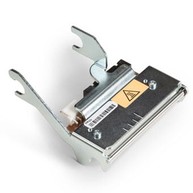
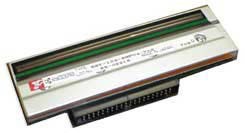
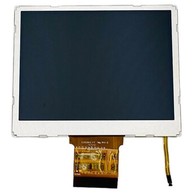
Printhead 203dpi for Honeywell PM23
710-228S-001
In stock
Shipping today
We ship the same day for purchases confirmed before 2pm EST. Contact our team for special cases.
33%
Honeywell
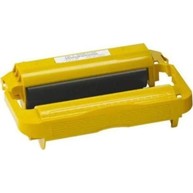
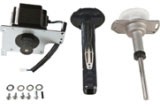
SP Rewinder Medios Internos Conjunto Secundario PM43 Z2 Repuesto
710-090S-001
In stock
Shipping today
We ship the same day for purchases confirmed before 2pm EST. Contact our team for special cases.
Honeywell
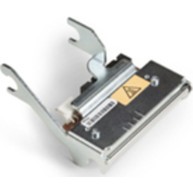
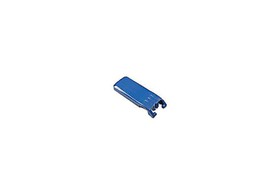
KIT, EDGE GUIDE, LARGE (Media Arm Edge Guide)
203-973-001
In stock
Shipping today
We ship the same day for purchases confirmed before 2pm EST. Contact our team for special cases.
33%
Honeywell
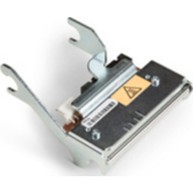
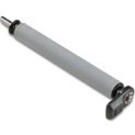
Platen Roller Assembly for Honeywell PM23
710-237S-001
Item on backorder — chat for lead time
33%
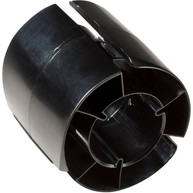
Honeywell
KIT, CORE 3 INCH (3 inch adapter (3´ Dolly))
203-972-001
Item on backorder — chat for lead time
Showing of products