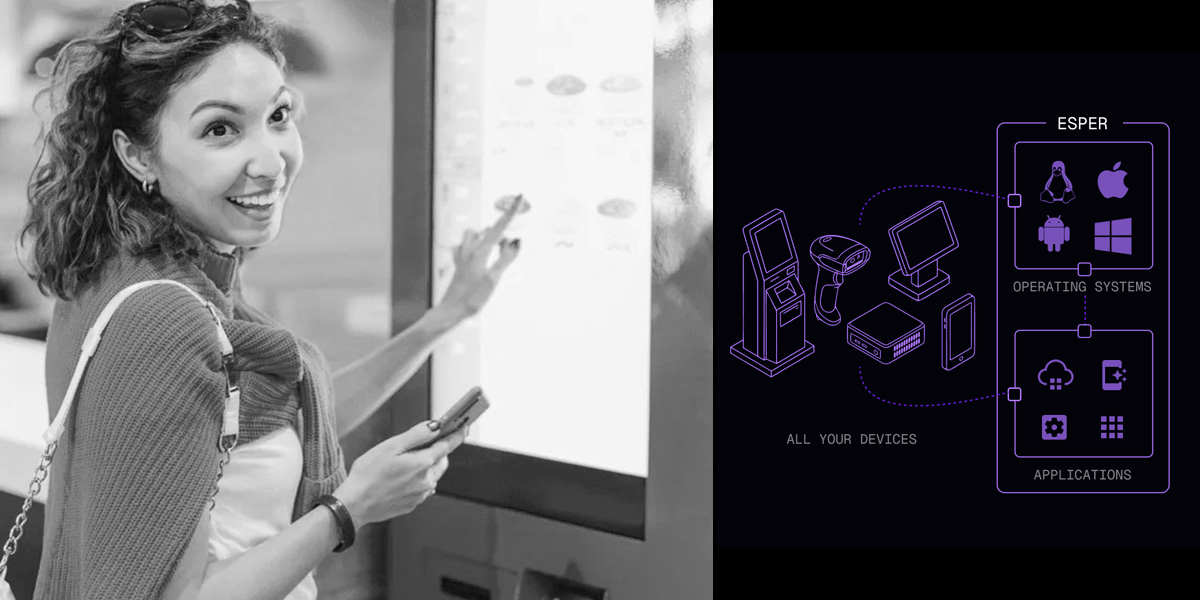
Retailers, restaurants, and hospitality brands are investing heavily in technology designed to improve customer experiences and streamline operations. Mobile POS systems, self-service kiosks, handheld devices, digital signage, and AI-powered edge technologies are becoming standard across stores and locations. Yet while these tools create new opportunities, many organizations underestimate what happens after the devices arrive.
The biggest challenge is no longer just selecting the right hardware—it is managing what happens next. Retail devices need to be configured, deployed, updated, secured, monitored, and supported across hundreds or thousands of locations. When device fleets are managed inconsistently, the operational impact can be significant: failed updates, lengthy setup times, security risks, downtime during peak hours, and support teams spending valuable time resolving preventable issues. Individually these disruptions can seem minor. At scale, the costs magnify and spread to affect labor efficiency, customer experiences, and revenue.
That is why cohesive device management platforms like Esper have become increasingly important. When combined with a digital transformation partner that manages device deployment and lifecycle, organizations gain a streamlined approach for controlling their entire device fleets—from provisioning and deployment to ongoing visibility and support—helping operators reduce friction, maintain uptime, and keep technology working as intended across every location.
The Real Cost of Device Deployment
For IT leaders, the true cost of an edge deployment extends far beyond the initial hardware purchase.
A delayed POS rollout can impact store openings. A failed kiosk deployment can create long customer lines. A disconnected handheld scanner can slow fulfillment operations. Every hour spent manually configuring devices or troubleshooting failures translates into lost productivity and lost revenue.
Traditional deployment models often create expensive bottlenecks:
- Manual device staging and provisioning
- Third-party kitting and logistics costs
- Delayed store deployments
- Vendor lock-in limitations
- Inconsistent device configurations
- On-site troubleshooting and support visits
These issues multiply quickly across hundreds or thousands of locations.
For organizations operating in retail, restaurants, and hospitality, where uptime and customer experience are critical, those unforeseen costs can become significant operational liabilities.
The Most Important Retail Device Deployment Best Practices
Today, rolling out retail and restaurant technology includes a complex mix of mobile POS systems, self-checkout devices, handhelds, kiosks, kitchen display systems, and customer-facing digital experiences. The difference between a successful deployment and an expensive operational burden often comes down to planning, execution, and support.
As retailers and restaurant operators scale technology across dozens—or thousands—of locations, several deployment best practices consistently separate high-performing organizations from those managing ongoing disruption.
1. Think Beyond Hardware Procurement
Successful deployment strategies account for the full device lifecycle, including:
- Provisioning and setup requirements
- Integration with existing systems
- Security and policy management
- Deployment speed across locations
- Ongoing support requirements
- Future scalability and expansion flexibility
TIP: One of the most common deployment mistakes is evaluating solutions based solely on upfront device cost. Hardware is only one piece of the equation.
2. Eliminate Manual Provisioning Wherever Possible
Historically, organizations shipped devices to a staging center where technicians manually configured settings, installed applications, loaded credentials, and prepared hardware before repackaging and sending devices to stores or restaurants.
At small scale this may work. At enterprise scale, it becomes costly and difficult to sustain.
Manual deployment often creates:
- Extended rollout timelines
- Increased labor requirements
- Inconsistent configurations
- Higher staging and kitting costs
- Greater risk of setup errors
- Delayed return on investment
TIP: The most successful organizations now prioritize zero-touch deployment approaches that dramatically reduce operational friction.
3. Standardize and Manage Devices as Critical Infrastructure
Retail and restaurant devices are no longer isolated endpoints. They directly support revenue generation and customer experiences.
When a mobile POS fails during peak hours or a self-service kiosk goes offline, the impact can immediately affect:
- Checkout speed
- Order accuracy
- Labor productivity
- Customer satisfaction
- Store operations
- Revenue capture
Because of this, device fleets require the same level of management discipline applied to core IT infrastructure.
TIP: Retail organizations need centralized visibility, proactive monitoring, remote support capabilities, and standardized controls across every device and location.
How Esper and Levata Modernize Deployment and Device Lifecycle Management
Executing deployment best practices becomes significantly easier when technology and services work together. By combining Levata’s enterprise mobility expertise and project activation services with Esper’s seamless provisioning and edge device management platform, organizations can reduce operational friction, improve uptime, and deploy technology faster at scale.
Esper provides a modern approach to enterprise device management purpose-built for Android, AOSP, iOS, Linux, and specialized edge deployments commonly found in retail, restaurant, and hospitality environments. Unlike traditional MDM platforms designed primarily for employee smartphones and laptops, Esper delivers deeper support for retail-grade hardware from manufacturers like Zebra, Honeywell, and Datalogic that run custom AOSP-based Android operating systems.
Paired with Levata’s design, deployment, and lifecycle support services, organizations gain a complete strategy that extends far beyond traditional device management.
Zero-Touch Seamless Provisioning
Esper's Seamless Provisioning capability allows devices to ship directly from manufacturers to stores or deployment locations already prepared for activation.
Seasonal scaling is one of the biggest operational challenges in retail and hospitality. During holiday peaks, back-to-school surges, or large promotional rollouts, organizations may need to deploy hundreds of additional POS systems, handheld scanners, kiosks, or tablets across distributed locations in a matter of days.
Once powered on, devices automatically apply:
- Applications and configurations
- Wi-Fi credentials
- Security settings
- Kiosk configurations
- Policies and permissions
- User-specific settings
The result:
- Faster multi-location rollouts
- Reduced staging and kitting effort
- Lower deployment costs
- Less IT labor involvement
- Consistent experiences across the device fleet
Instead of warehouses filled with manual setup activity, organizations can deploy technology directly where it generates value.
Centralized Fleet Visibility and Control
Esper provides IT teams with a unified view across distributed device environments.
Key capabilities include:
- Real-time fleet health monitoring
- Remote troubleshooting and remediation
- Automated updates and software rollouts
- Phased rollout controls
- Device compliance enforcement
- Policy management across locations
Reduce the impact of device loss and theft with remote lock, remote wipe, and location tracking capabilities that help retailers protect shared handhelds, tablets, and scanners.
Levata Managed Services: Support Beyond Deployment
Successful technology rollouts require more than devices and software—they require a strategy for long-term execution and support. Levata’s managed and lifecycle services help organizations design, deploy, and sustain large-scale device environments through hardware sourcing, deployment planning, integration guidance, project activation, staging and configuration services, and rollout management.
Together, Levata and Esper help organizations reduce deployment friction, improve uptime, and create a repeatable framework for managing the growing complexity of retail and restaurant technology environments.
Accelerating Time-to-Value
The biggest advantage of modern deployment strategies is not simply reducing hardware costs. It is accelerating time-to-value.
As AI, automation, and customer-facing digital experiences continue reshaping the industry, the businesses that modernize their edge infrastructure fastest will be positioned to lead the next generation of retail and hospitality innovation.
The faster devices move from purchase order to productive operation, the faster organizations realize ROI.
That is why leading retailers, restaurants, and hospitality operators are shifting their focus from hardware optimization alone to deployment optimization.
Contact Levata to schedule a deployment assessment and see how Esper and Levata can reduce time-to-value for your next retail rollout.