
Sélectionner un modèle

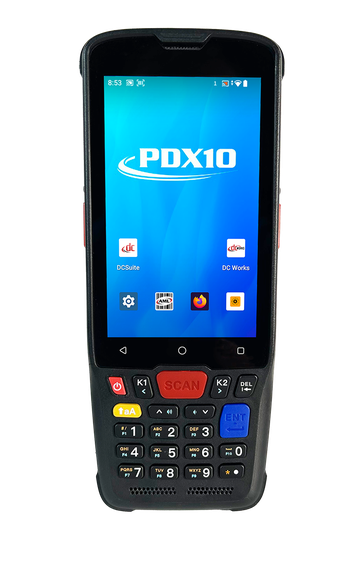
The AML PDX10 is a handheld mobile computer that pairs a physical 20-key numeric keypad with a 4-inch capacitive touchscreen, giving operators a choice between direct key entry and touch-based interaction. It runs Android 14 and ships with an integrated 2D barcode imager and preloaded DC Suite data collection software, making it ready to handle barcode-driven workflows from the moment it is powered on.
Key Features:
- Android 14 operating system provides a current, familiar platform that supports a wide range of enterprise and custom applications.
- The 4-inch capacitive touchscreen accepts touch input while remaining responsive to gloved or deliberate hand use common in active work environments.
- A 20-key numeric keypad sits alongside the display, letting operators enter quantities and confirm records without switching away from a physical key.
- The integrated 2D barcode imager reads product and asset barcodes directly, removing the need for a separate scanning peripheral.
- Wi-Fi and Bluetooth connectivity keep the device networked and paired to peripheral devices without relying on a wired tether during use.
- USB-C handles both charging and data transfer through a single, reversible port, reducing cable clutter at the workstation.
- Preloaded DC Suite data collection software means common collection tasks can be configured and deployed without additional software procurement.
Physical Input Built for Data Entry Tasks
Combining a touchscreen with a dedicated numeric keypad addresses a practical gap that touch-only devices leave open. When an operator needs to key in a count, a quantity or a confirmation code repeatedly across a long session, physical keys reduce errors and fatigue compared with an on-screen keyboard. The 20-key layout keeps the footprint compact while covering the numeric range that inventory and asset workflows demand most.
Android 14 as the Operating Foundation
Running Android 14 places the PDX10 on a platform that device management tools, enterprise mobility suites and custom applications widely support. Updates to the underlying OS, security patching cadences and app compatibility all benefit from the currency of a recent Android release, which matters when deploying devices across a team that shares a common management environment.
Integrated 2D Imager Reads the Barcodes That Matter
The built-in 2D imager captures both linear and 2D barcodes, covering the symbologies most commonly found on product labels, shipping cartons and asset tags. Because the imager is integrated rather than attached, there is no dongle to lose, no pairing to maintain and no additional point of failure during a busy shift.
Wireless Connectivity Keeps Operators Mobile
Wi-Fi provides the network connection that real-time data collection requires, transmitting scanned records to a host system without manual syncing. Bluetooth extends that flexibility by allowing the device to pair with printers, headsets or other peripherals that sit nearby without a cable.
USB-C for Charging and Data Transfer
The USB-C port consolidates power delivery and wired data transfer into one connection. The reversible connector reduces the small but cumulative friction of aligning a cable correctly during charging, and the same port handles file transfers or tethered communication when that path is preferred over wireless.
DC Suite Ships Ready to Run
DC Suite is preloaded on the device, providing a data collection software layer that operators can configure for common tasks without sourcing or licensing a separate application. Having the software present at first boot shortens the time between unboxing and productive use.
Terminaux Portables AML PDX10-1601-10
PDX10-1601-10